fbpx
TEMPLATE USED:
pageid: 20296

Staying in Puerto Natales: Torres del Paine and Beyond

Torres del Paine may be the reason you come to this part of Patagonia, but there is plenty to discover beyond its trails. Fjords lead toward glaciers, estancias offer a glimpse into rural life, and the waterfront town of Puerto Natales brings together local restaurants, comfortable hotels, and views that invite you to slow down.

Basing yourself here opens up a different kind of itinerary. You might spend one day hiking beneath the towers, another sailing through Última Esperanza Fjord, and the next exploring a traditional ranch on horseback. Each evening, you return to the same hotel, with time to head into town for dinner or simply rest after a day outdoors.

For travelers who want to combine the highlights of Torres del Paine with a broader experience of the region, Puerto Natales is a base worth considering. Here are some of the activities and places to stay that can help shape your trip.

Accommodation covers a broader range of budgets than you will generally find inside Torres del Paine. The main trade-off is the time spent traveling to and from the park, so it is worth considering the total cost of accommodation, excursions, and transfers. If you plan to hike in the park every day, staying closer to the trailheads can save considerable time.

From Puerto Natales, these are some of the experiences you can include:


Full Day Paine: a scenic introduction to the park

This excursion explores several of Torres del Paine’s most recognizable landscapes by vehicle, with stops for photographs and short walks. Depending on the itinerary, highlights can include Lake Pehoé, the Salto Grande waterfall, Lake Nordenskjöld, and viewpoints overlooking the Paine massif. It is a good option for travelers who want to appreciate the park’s scenery at a gentler pace, with time to look for wildlife along the way.


Grey Glacier boat trip: getting close to the ice

Sailing across Lake Grey reveals floating icebergs, mountain slopes, and the glacier’s blue walls. The boat journey offers a striking perspective on the scale of the glacier without a long mountain hike. However, reaching the boarding area requires a 30 to 45-minute walk along an uneven beach, with a similar walk after disembarking. Travelers need to be comfortable with that terrain. Departures also depend on weather and operating conditions.


Base Torres hike: the classic mountain challenge

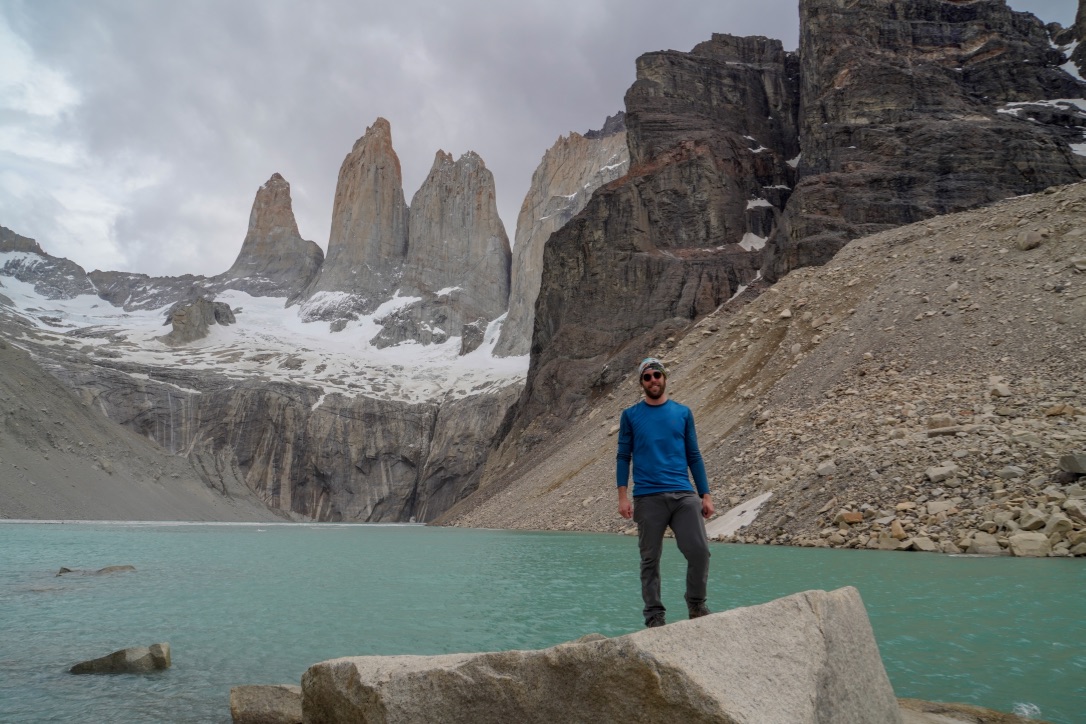
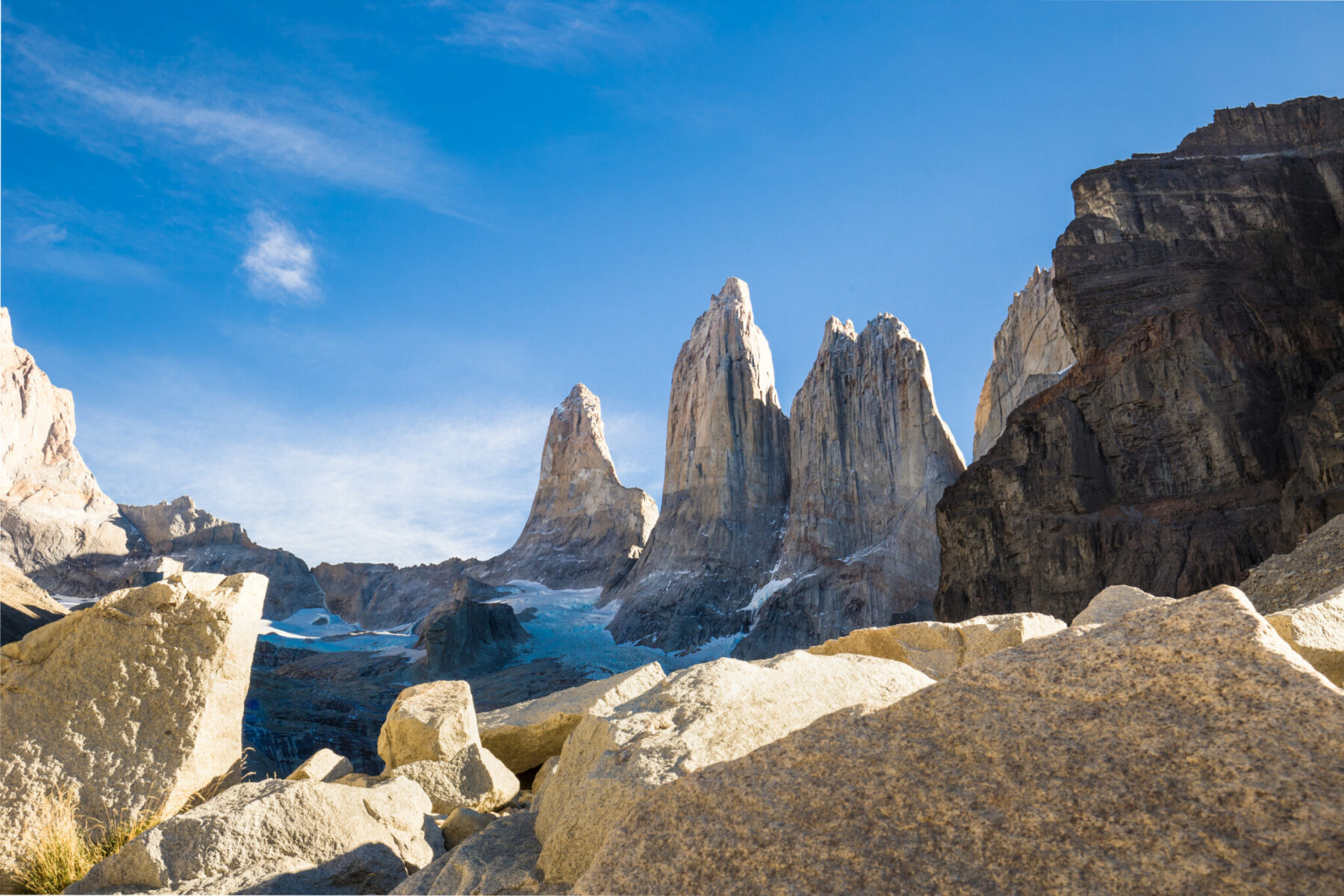
This demanding full-day hike follows the Ascencio Valley, passes through native forest, and finishes with a steep climb over rocky terrain. The reward is the glacial lagoon beneath the park’s three granite towers. Once you arrive, give yourself a moment to sit quietly and watch the clouds move around the peaks. From Puerto Natales, the combination of hiking and road transfers makes this a particularly long day.


French Valley lookout: mountains, forests, and hanging glaciers
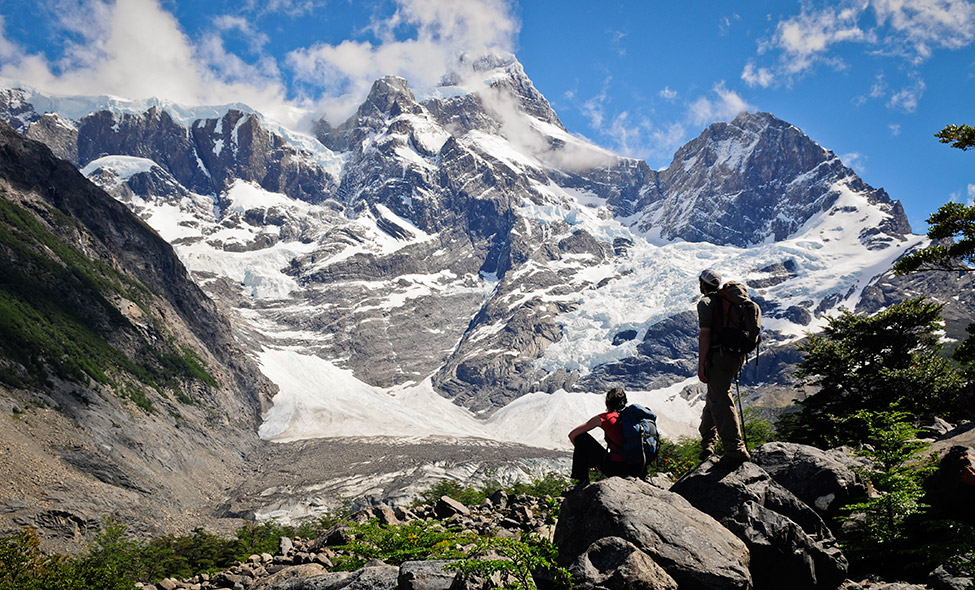
The day begins with a catamaran crossing of Lake Pehoé to Paine Grande, followed by a hike past lakes and through forest toward the French Valley. The climb to the Francés lookout opens up views of Paine Grande’s hanging glacier and the surrounding mountain walls. This is a demanding excursion that requires a good level of fitness. The walking itinerary must fit the return catamaran schedule, with allowance for trail conditions and the group’s pace.


Grey Glacier viewpoints: a taste of the western W

After crossing Lake Pehoé to Paine Grande, you follow the western arm of the W toward viewpoints overlooking Lake Grey and the glacier beyond. The route combines open stretches, woodland, and expansive views across the water. Different viewpoints involve different walking distances, so the turnaround point should be chosen carefully around your fitness, the weather, and the return boat connection. Viewpoints closer to Refugio Grey require a substantially longer hike.


Estancia La Península: a day of Patagonian ranch life

A boat journey from the Puerto Natales area takes you across the water to this estancia on the Antonio Varas Peninsula. The full-day experience typically combines a guided horseback ride or hike with a traditional Patagonian lamb barbecue, sheepdog demonstrations, and sheep shearing. It is an opportunity to experience the region’s rural traditions while exploring landscapes beyond the national park.


Estancia Mercedes: connecting with a local family and their land
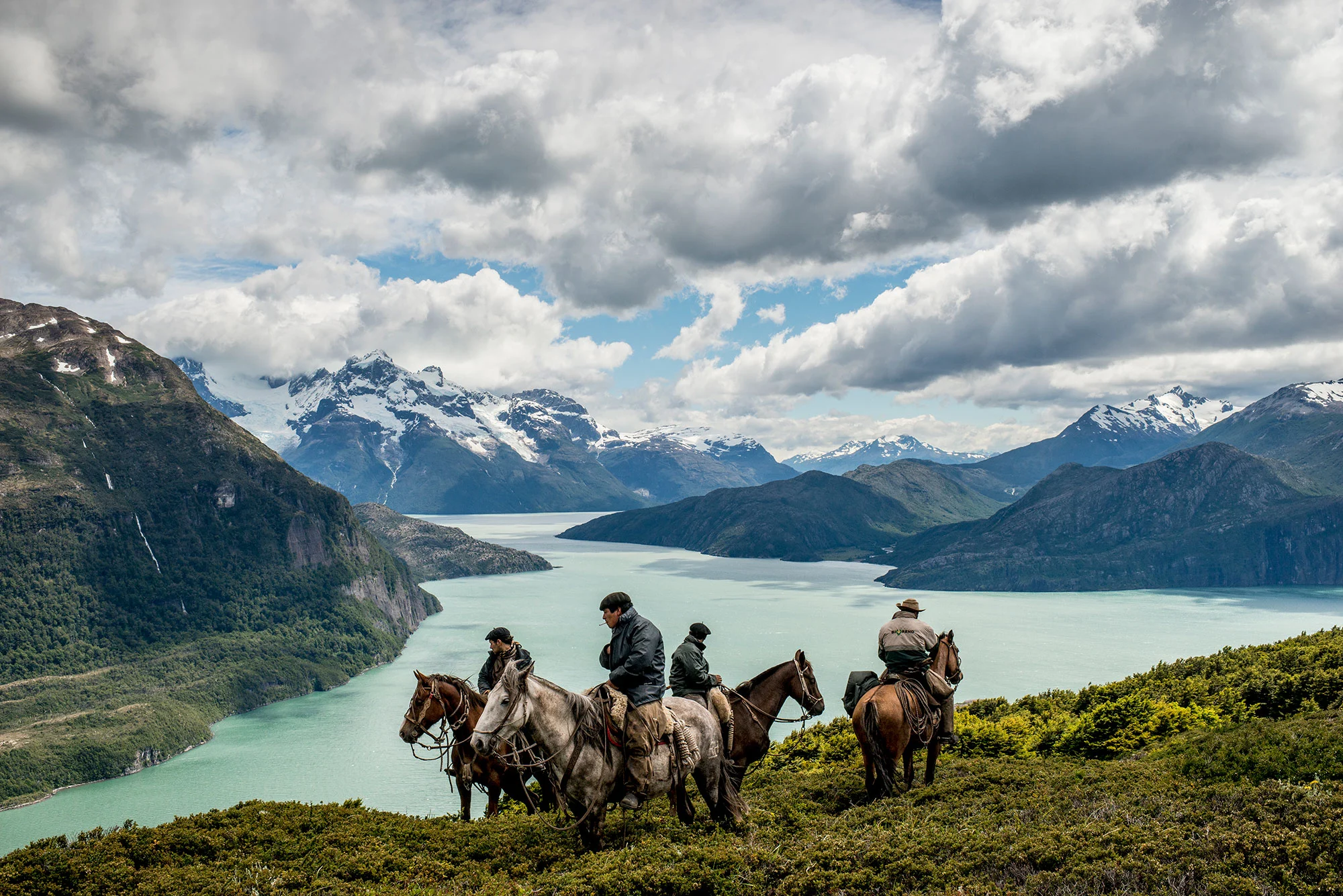
Also on the Antonio Varas Peninsula, Estancia Mercedes introduces visitors to a family ranch whose history stretches back to 1916. Depending on the program arranged, a visit can include horseback riding, learning about everyday work on the estancia, and sharing local food. The emphasis is on spending time with the hosts and understanding the traditions and skills that continue to shape rural life in Patagonia.


Balmaceda and Serrano glaciers: exploring Última Esperanza Fjord
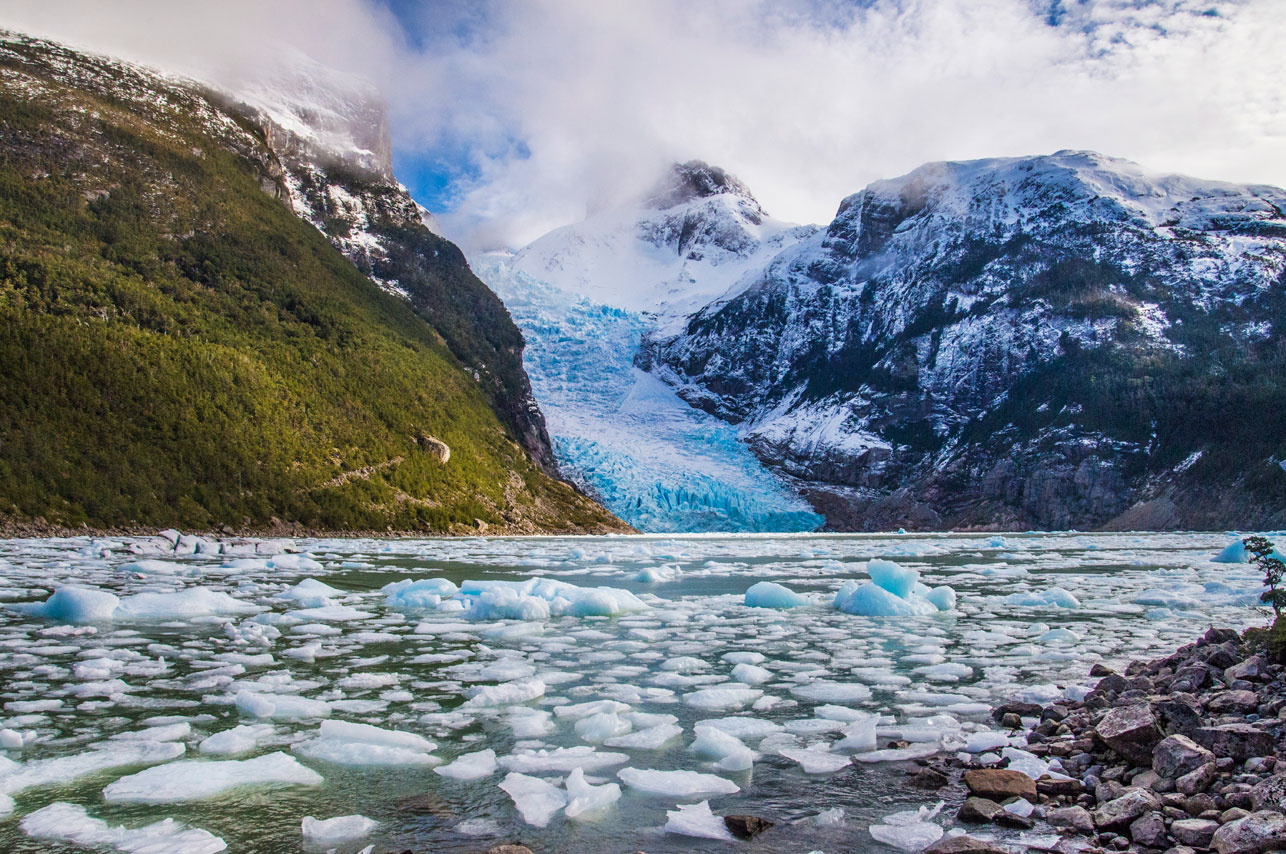
This boat excursion follows the fjord into Bernardo O’Higgins National Park, passing rugged shores and mountain scenery. You view Balmaceda Glacier from the water before going ashore for a walk toward Serrano Glacier. It offers a different perspective on the region, with the journey through the waterways forming as much a part of the experience as the glaciers themselves.

Puerto Natales also offers several distinctive places to stay. Some put you within walking distance of restaurants and the waterfront, while others occupy quieter settings outside the town center.


The Singular Patagonia

Set in Puerto Bories, a short drive from Puerto Natales, this luxury hotel occupies a restored industrial complex that once served as a cold-storage plant. Historic machinery remains on display, giving the property a strong connection to the region’s past. Spacious rooms with water views, dining focused on local ingredients, and excursions throughout the region make it an appealing choice for travelers interested in history, food, and a high level of comfort.


Remota Patagonia Lodge
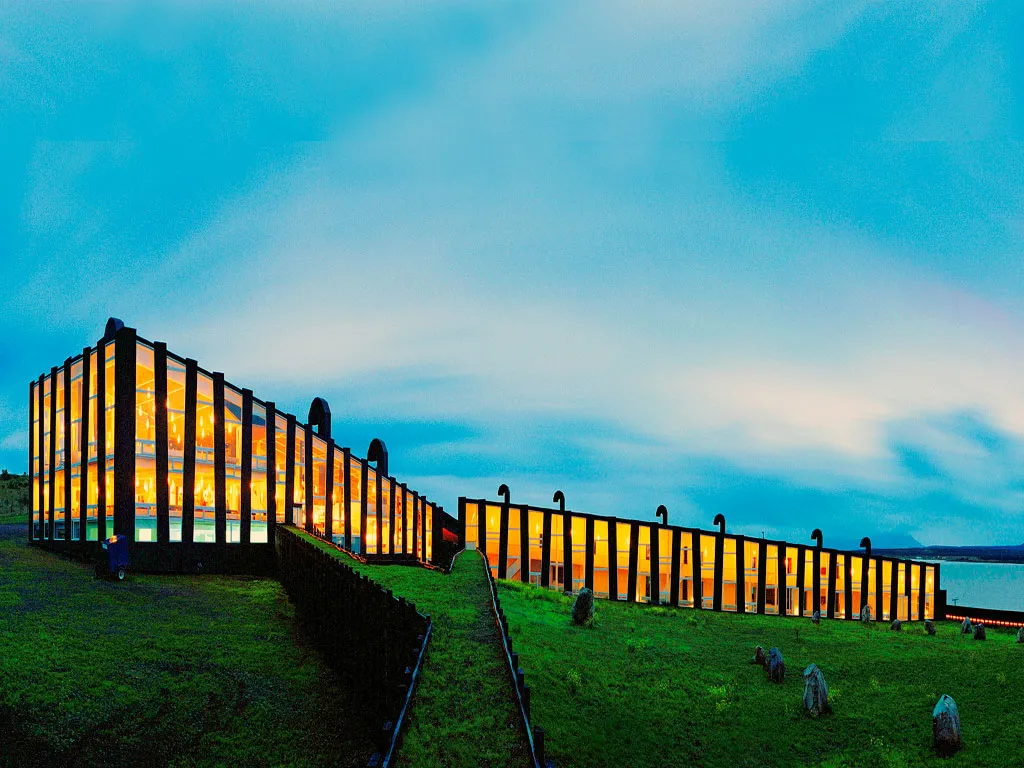
On the outskirts of Puerto Natales, Remota combines distinctive architecture by Germán del Sol with views toward the water and mountains. Its design draws inspiration from Patagonia’s rural industrial buildings, creating a strong sense of place. A heated pool, saunas, and guided excursions make it worth considering if you want to combine active days with time to relax at the hotel.


NOI Indigo Patagonia
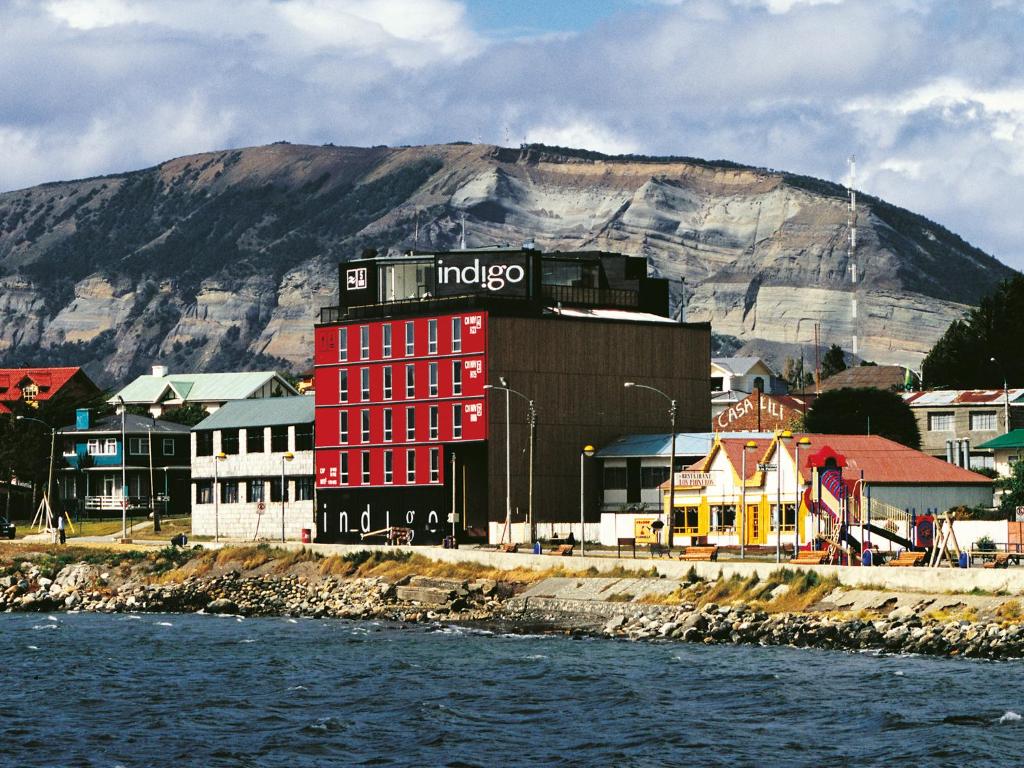
This contemporary hotel sits by the waterfront in Puerto Natales, making it convenient for exploring town between excursions. Wood features throughout the interiors, while the upper-floor spa offers a place to unwind with views over Última Esperanza. Rooms have different outlooks, including city and water views, so choosing the right category matters if the scenery is a priority.


Hotel Costa Australis
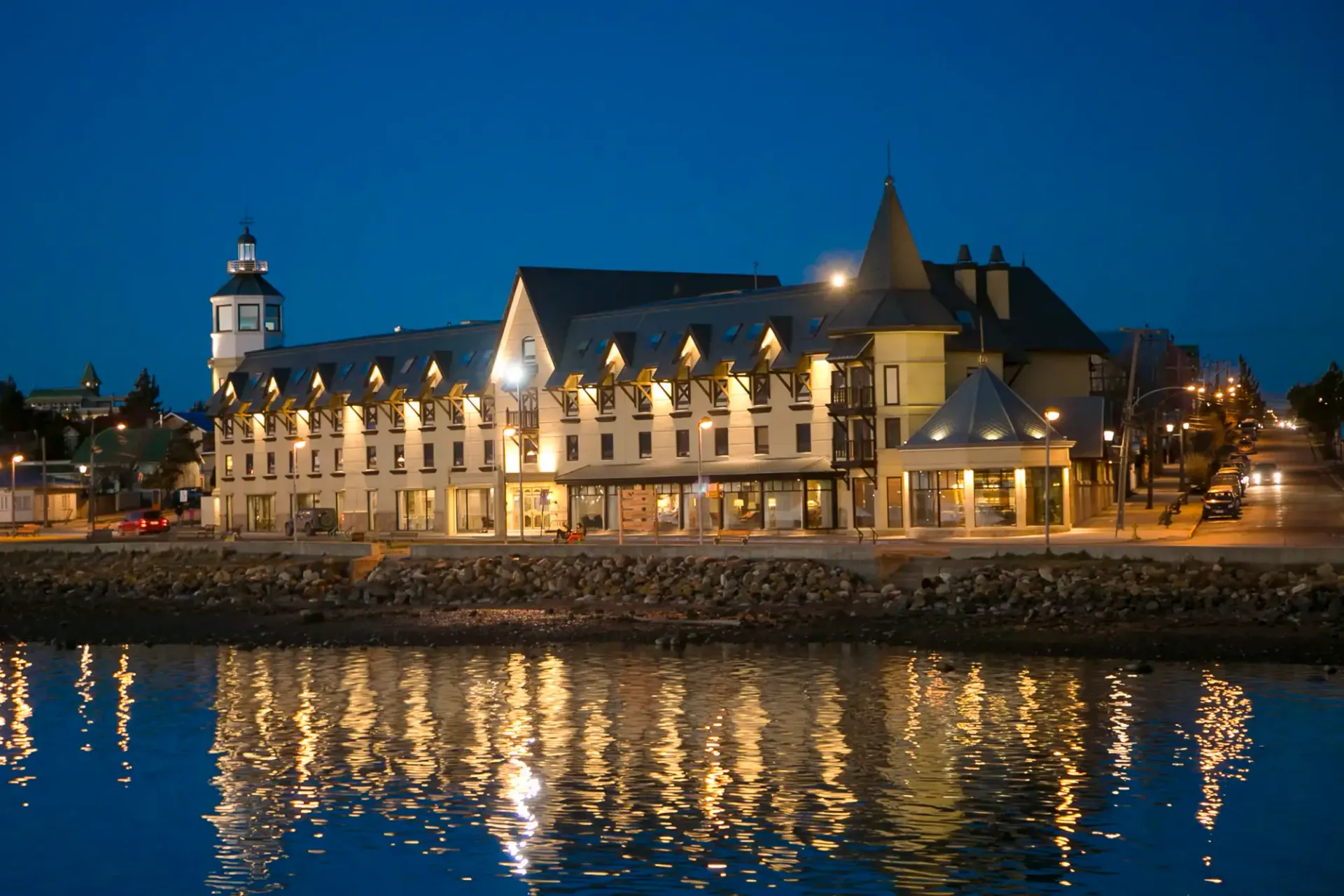
A classic option on the town’s waterfront, Costa Australis combines a central location with a restaurant serving regional cuisine. Its position makes it convenient for walking along the shore or heading out to nearby restaurants and cafés. It is worth considering if you want an established hotel with easy access to town, and it also offers programs combining accommodation with excursions.


Altiplánico Puerto Natales
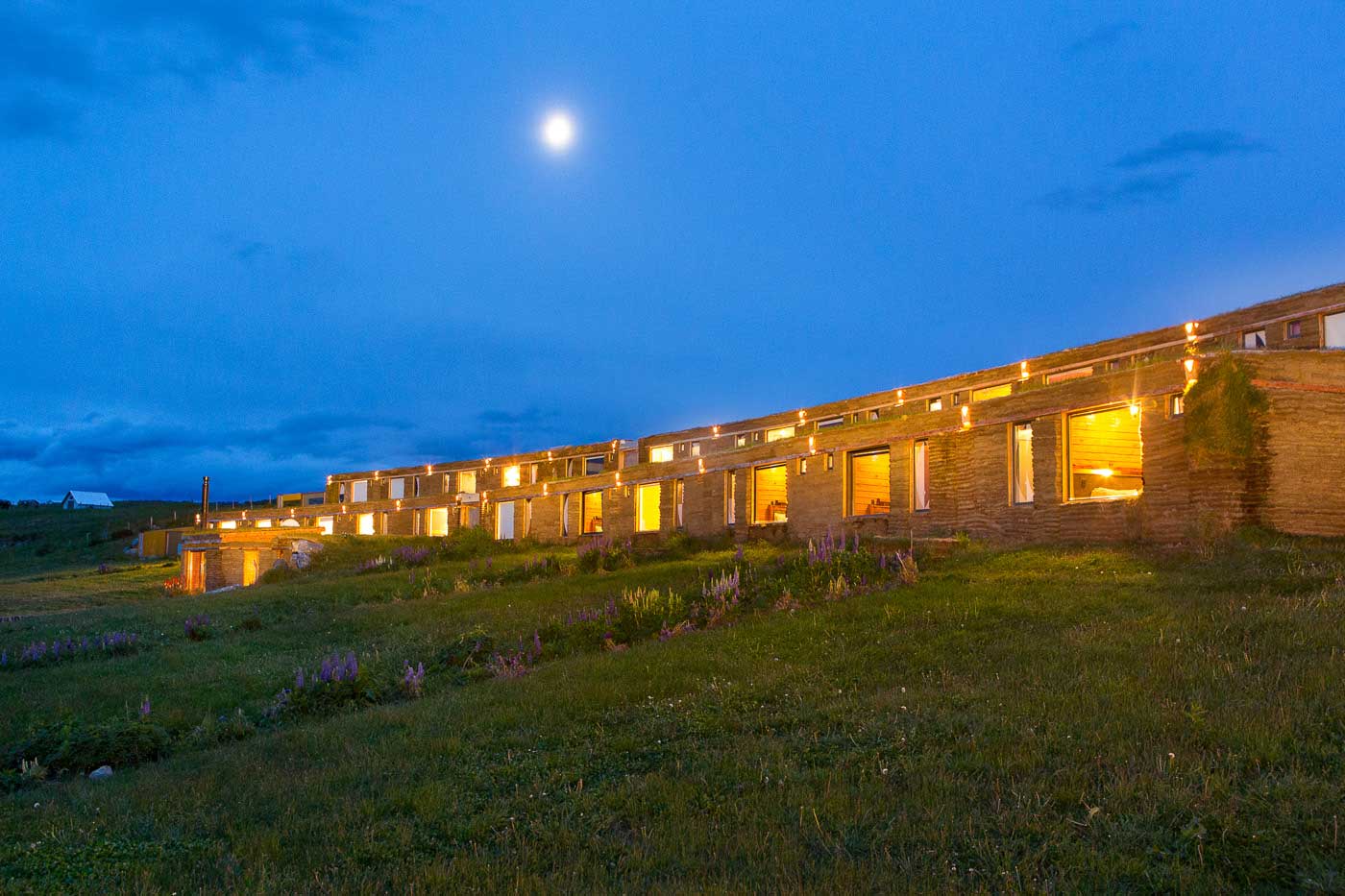
Around three kilometers from the center, Altiplánico is built into the hillside, with grass-covered roofs and natural materials that help it blend into the landscape. Rooms look toward Última Esperanza, and the interiors emphasize wood, stone, and understated decoration. Consider it if you value distinctive architecture, open views, and a quieter setting, with transport arranged for evenings in town.
The W vs. the O Circuit: Hiking Torres del Paine

Torres del Paine is one of my favorite places in the world. Over the years, I’ve had the opportunity to explore the park on several occasions, including hiking the famous O Circuit, and there are still places here that leave me speechless.

I’m Christian, the founder of Ecochile, and I wanted to share some of my experiences and recommendations to help you decide which of Patagonia’s two most famous treks is right for you.

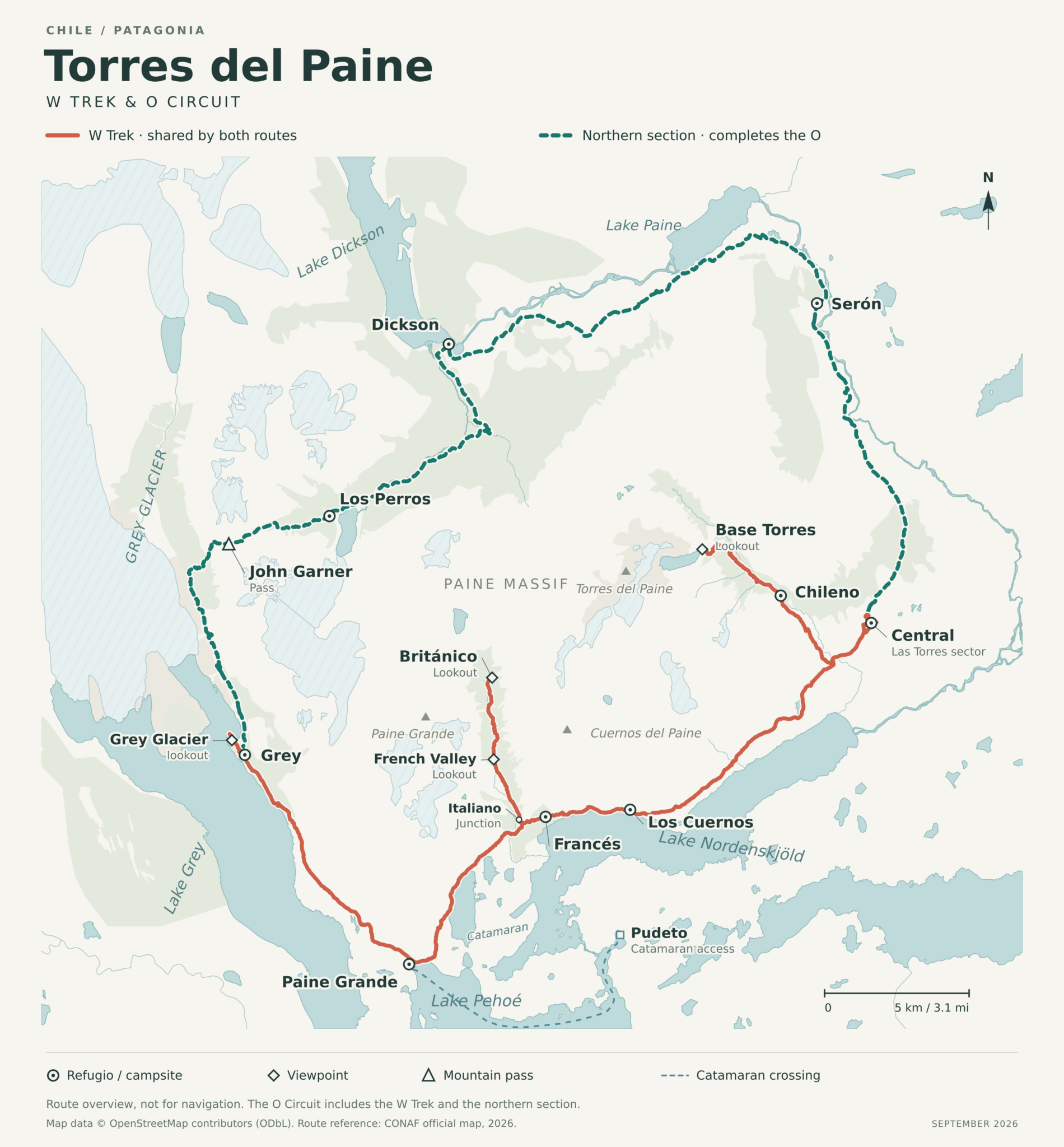
Internationally known, the W and the O are arguably two of the most adventurous ways to explore Torres del Paine National Park. Both will take you through extraordinary landscapes, with enormous glaciers, turquoise lakes, ancient forests and some of the most spectacular granite mountains in South America.

Choosing between them will depend mostly on how much time you have available and your hiking experience. The W usually takes five days, while the O takes around eight. The O is considerably more demanding, with longer hiking days, more remote sections and a challenging mountain pass.

Here’s what you can expect from each itinerary, along with some of my favorite moments and personal recommendations.

The W Trek: 5 days

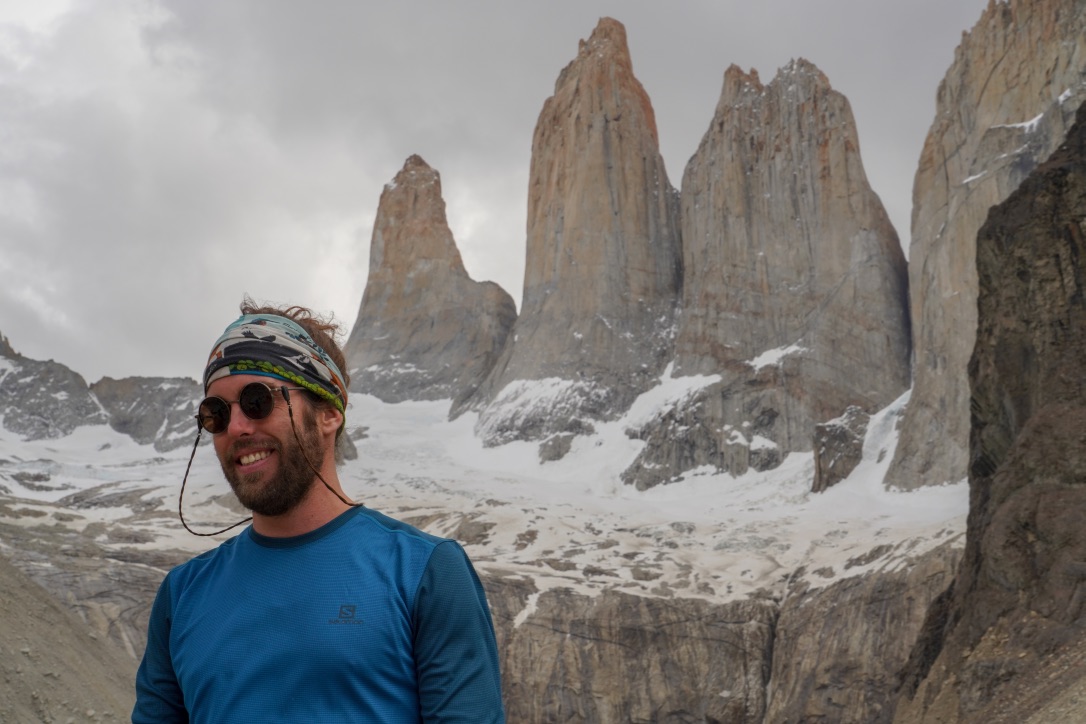
The W takes you to the three most iconic destinations in Torres del Paine: the Base of the Towers, French Valley and Grey Glacier.

You’ll want to spend the night before your trek in Puerto Natales or at a hotel inside the national park, as your adventure starts early the following morning.

If you choose a program that includes accommodation and meals, you won’t need to carry camping equipment or food for the entire trek. Just pack your clothes, personal belongings and perhaps a few extra snacks.

Day 1: Base Torres, the most iconic viewpoint in Patagonia

Your adventure begins with an early transfer from Puerto Natales to the Laguna Amarga sector. From here, you’ll continue to the trailhead for one of Patagonia’s most famous hikes: Base Torres.

The trail climbs through Ascencio Valley, passing beautiful forests and mountain landscapes before a final steep ascent brings you to the lagoon at the foot of the three granite towers.

My personal experience

The first time I reached Base Torres was actually at the end of the O Circuit. After spending so many days hiking around the Paine Massif, I was exhausted, but reaching the base of those enormous granite towers made every step worthwhile.

There’s something incredibly powerful about being so close to these mountains. Photographs simply don’t capture their size or the feeling of standing beneath them.

My recommendation is not to rush when you arrive. Find a rock, sit down and take a moment for yourself. Watch how the clouds move around the towers, constantly changing the landscape. Sometimes they disappear almost entirely, only to reveal themselves again a few minutes later.

Listen to the wind, observe the mountains and simply contemplate where you are. For me, this is one of those places where nature makes you forget about everything else for a moment.

After the hike, return to Refugio Torre Central or Chileno, depending on your reservation. You’ll spend the night in a shared room or an equipped tent, with dinner at the refugio.

Day 2: Lake  and Los Cuernos

Today, you’ll hike from the Las Torres sector toward Refugio Los Cuernos or Francés.

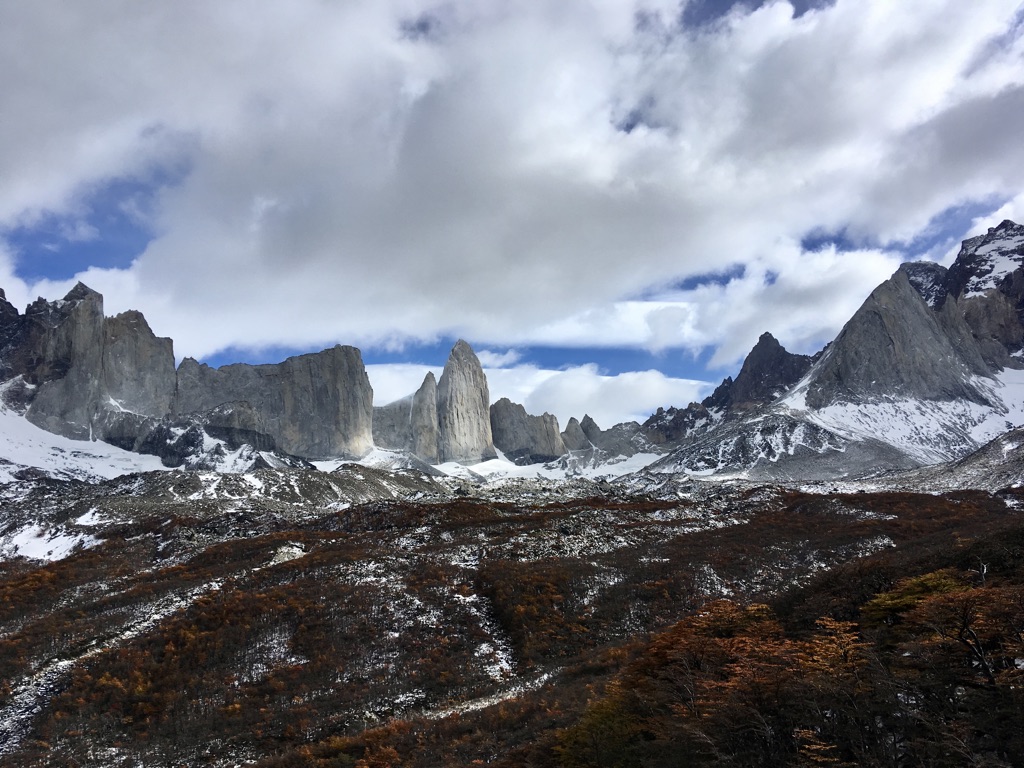
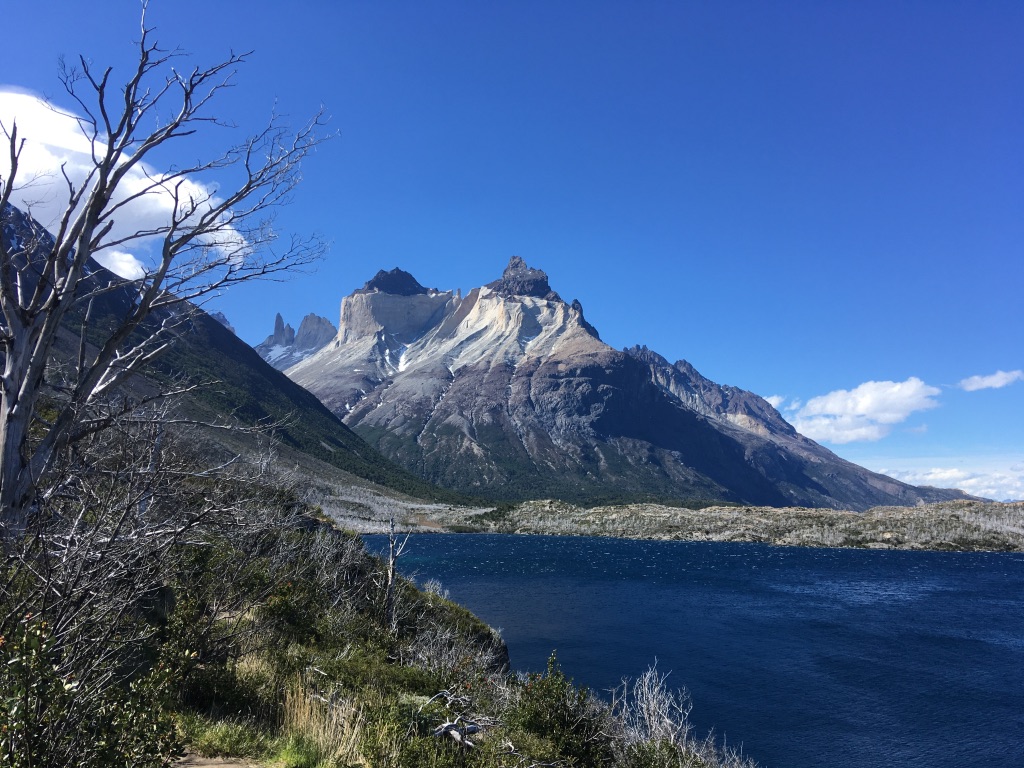
The trail takes you through beautiful Patagonian forests and along the shores of Lake Nordenskjöld, with spectacular views of the Cuernos del Paine.

This is a wonderful day to enjoy the constantly changing scenery. You’ll follow the lake for much of the hike, surrounded by mountains and some of the park’s most beautiful landscapes.

You’ll spend the night at Los Cuernos or Francés, depending on your itinerary, with accommodation in a shared room or an equipped tent.

Day 3: French Valley and Mirador Británico

Today, you’ll explore one of the most spectacular sections of the W: French Valley.

Starting from your refugio, you’ll make your way into the valley, gradually gaining altitude as the landscape opens up around you.

Depending on the weather and your energy levels, you can hike to Mirador Francés or continue farther up to Mirador Británico.

My personal experience

Británico is one of those places that makes you realize just how small we are.

I still remember my first time reaching the viewpoint and finding myself in the middle of what felt like an enormous natural amphitheater made entirely of granite.

Massive mountains rise in almost every direction, surrounding you with their incredible rock walls. I remember standing there and feeling incredibly small in comparison to everything around me.

It’s an extraordinary place to simply stop and take in the scale of Patagonia.

After exploring the valley, descend and continue toward Refugio Paine Grande, where you’ll spend the night. This can be a particularly long day if you’re starting from Los Cuernos and hiking all the way to Británico.

Day 4: Grey Glacier

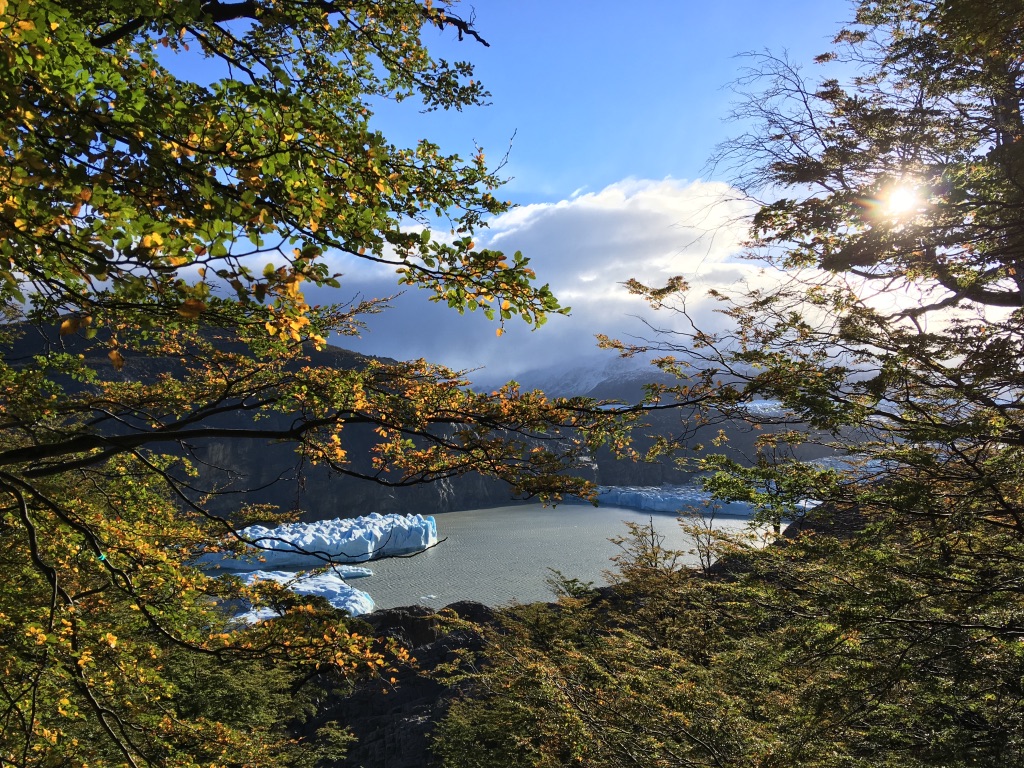
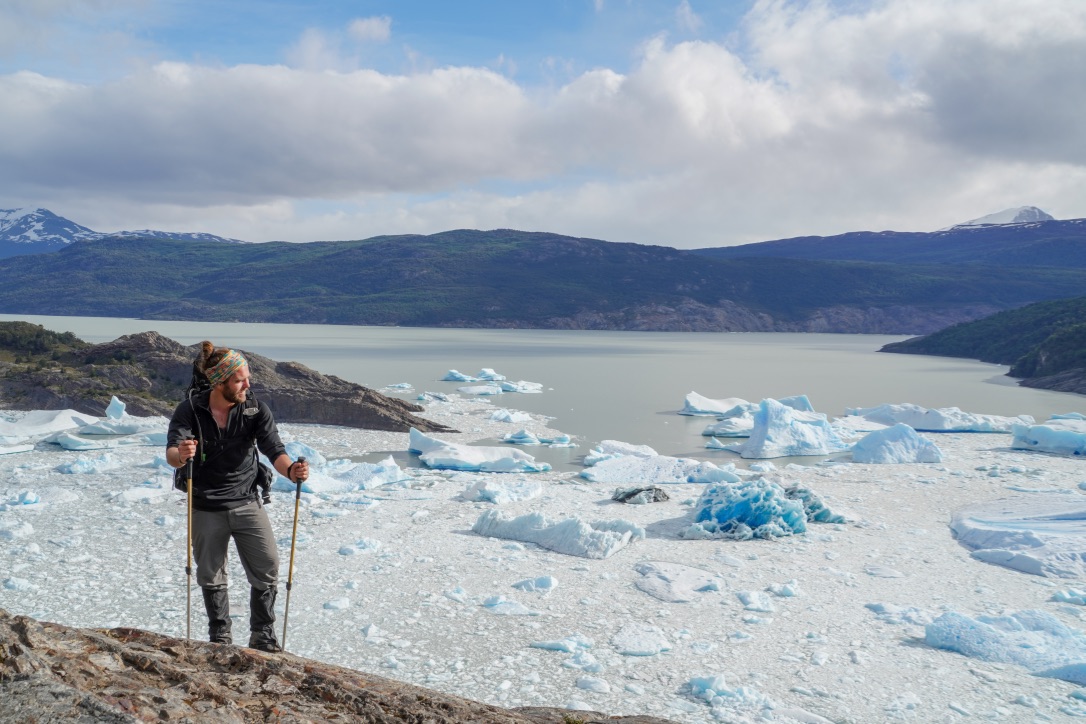
Today, you’ll hike from Paine Grande toward Refugio Grey, enjoying beautiful views over Lake Grey and its floating icebergs.

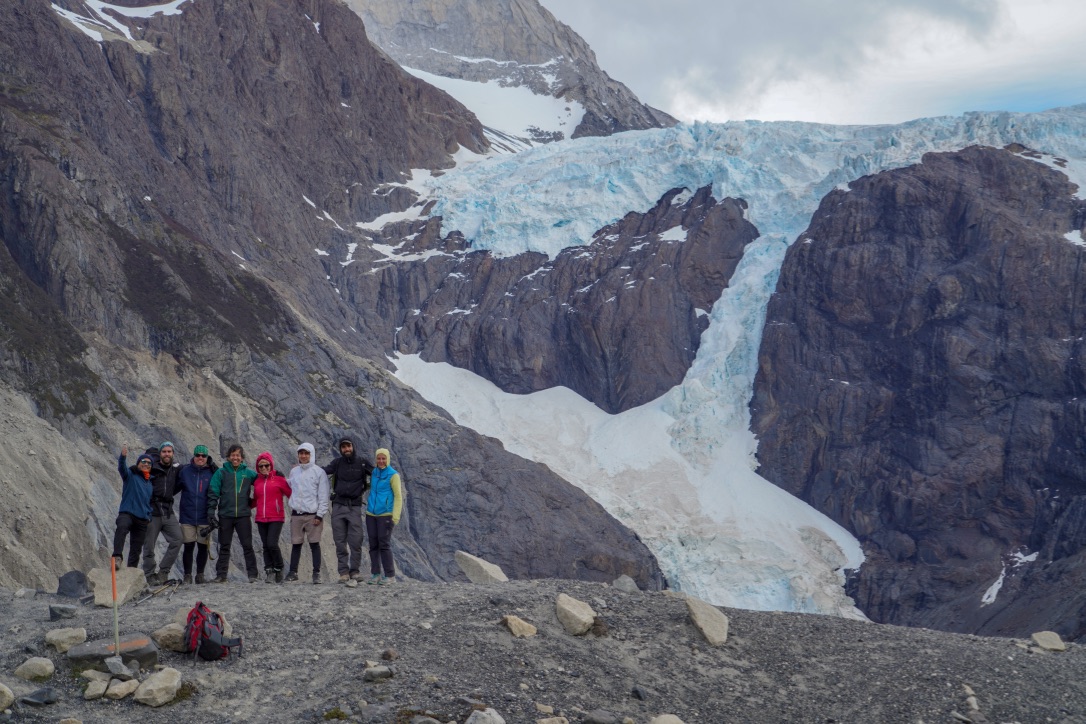
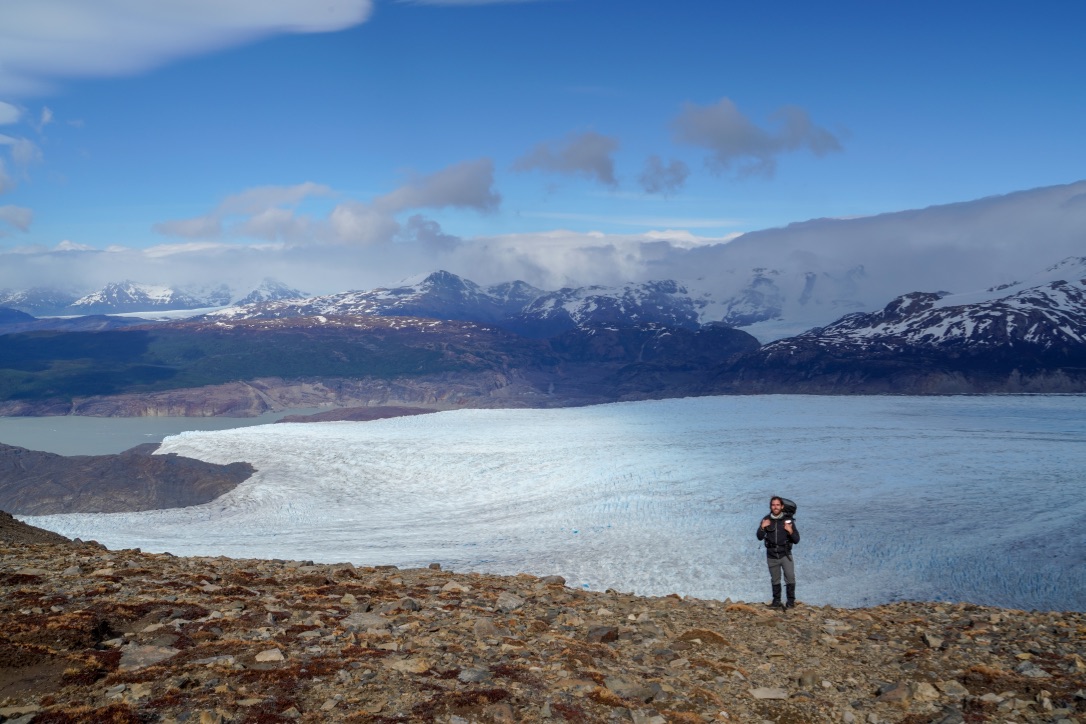
Grey Glacier is absolutely enormous. It’s one of those landscapes where it’s difficult to comprehend the scale of what you’re seeing, particularly when you’re looking at its massive walls of ice from a distance.

Depending on your itinerary, you can also arrange an ice-hiking or kayaking excursion, allowing you to experience the glacier from a completely different perspective.

One of my favorite refugios in the park

Refugio Grey has always been one of my favorites. Compared with some of the larger refugios along the W, it feels smaller, quieter and more intimate.

I particularly enjoy its surroundings, with beautiful forests where I’ve even been lucky enough to see woodpeckers.

After several days of hiking, it’s a wonderful place to relax, enjoy dinner and appreciate the fact that you’re spending the night in such a remote part of Patagonia.

Day 5: Hanging bridges and return to Puerto Natales

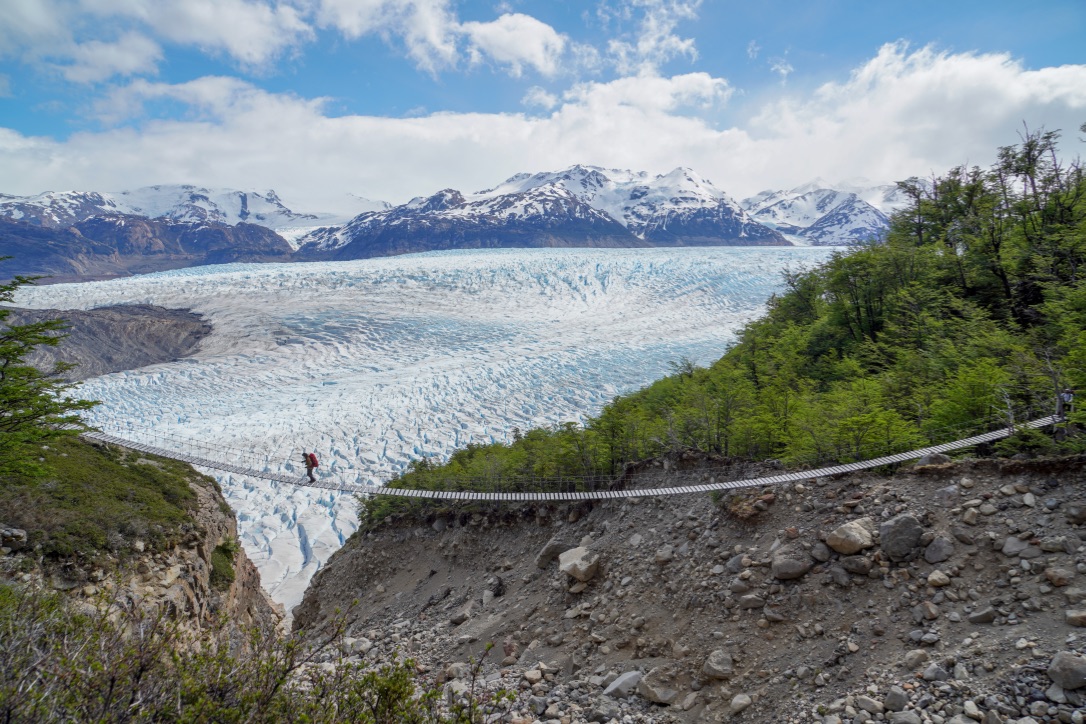
If your schedule allows, wake up early and hike toward the hanging bridges north of Refugio Grey. From these viewpoints, you can enjoy extraordinary panoramas of Grey Glacier and the surrounding landscape.

You’ll then return to Refugio Grey and hike back to Paine Grande, where you’ll take the catamaran across Lake Pehoé to Pudeto.

Keep in mind that visiting the hanging bridges and returning to Paine Grande on the same day requires an early start and careful planning around the catamaran schedule. If you’d prefer more time to explore, it’s worth adding another night.

From Pudeto, take your transfer back to Puerto Natales. I recommend spending the night there before continuing your journey.

The O Circuit: 8 days

If you have more time and you’re looking for a bigger adventure, the O Circuit takes you around the entire Paine Massif, including the more remote northern section of the national park.

You’ll enjoy all the highlights of the W, but also explore landscapes that relatively few visitors get to experience.

The O takes approximately eight days and covers around 120 to 130 km. It’s a more demanding adventure, particularly because of the remote sections and the crossing of John Gardner Pass.

Day 1: Puerto Natales to Serón

Your journey begins with a transfer from Puerto Natales to the Las Torres sector, where you’ll start hiking toward Camping Serón.

This first section takes you through open landscapes, beautiful valleys and rolling hills, with spectacular views of the surrounding mountains.

Spend the night at Serón.

Day 2: Serón to Dickson

Continue north through increasingly remote landscapes, passing forests, rivers and beautiful valleys.

You’ll eventually reach Dickson, a wonderfully isolated campsite situated near Lake Dickson and surrounded by mountains.

For many hikers, this section is where the O starts feeling very different from the W. You’re now exploring the quieter northern side of the Paine Massif.

Day 3: Dickson to Los Perros

Today, you’ll continue through forests and gradually ascend toward Camping Los Perros, passing views of the spectacular Los Perros Glacier.
You’ll spend the night at Los Perros, where facilities are more basic than at some of the refugios along the W.

Get some rest because tomorrow is one of the most demanding and memorable days of the entire circuit.

Day 4: John Gardner Pass and Grey Glacier

Today is one of the great highlights of the O Circuit: crossing John Gardner Pass, approximately 1,200 metres above sea level.

You’ll start early, ascending through forests before reaching more exposed mountain terrain. The weather can make this section particularly challenging, with strong winds, rain or even snow.

But once you reach the pass, the landscape is extraordinary.

My personal experience

Crossing John Gardner Pass is one of my most unforgettable memories of Patagonia.

The first time I did it, there was snow on the pass, which made the experience even more adventurous.

What really struck me was seeing Grey Glacier from above. It’s only from this perspective that you start to understand how massive it really is. The glacier stretches out in front of you, surrounded by the mountains and ice fields of southern Patagonia.

And then comes the descent!

I remember it as one of the longest downhill hikes I’ve ever done. After climbing over the pass, you still have a considerable distance to cover as you descend toward Refugio Grey.

It’s a physically demanding day, but also one of the most rewarding experiences I’ve had in the mountains.

You’ll eventually reach Refugio Grey, where you can enjoy a well-deserved dinner and rest.

Day 5: Grey Glacier to Paine Grande

After yesterday’s adventure, today’s hike will feel considerably easier.

You’ll follow the trail south along Lake Grey toward Paine Grande, enjoying more views of the glacier, floating icebergs and beautiful mountain scenery.

Spend the night at Refugio Paine Grande.

Day 6: French Valley

Today, you’ll explore French Valley, hiking toward Mirador Francés or continuing all the way to Mirador Británico.

You’ll be rewarded with spectacular views of the granite amphitheater and the surrounding peaks.

After descending, continue toward Refugio Francés or Los Cuernos, where you’ll spend the night.

Day 7: Lake Nordenskjöld and Las Torres

Follow the trail along Lake Nordenskjöld toward the Las Torres sector, enjoying the beautiful views of the Cuernos del Paine along the way.

Spend your final night in the park at Refugio Torre Central or another accommodation in the Las Torres sector.

Day 8: Base Torres and return to Puerto Natales

Your final day brings you to one of the most iconic locations in all of Patagonia: the Base of the Towers.

After seven days of exploring the Paine Massif, this final ascent is a fitting way to complete your adventure.

This is exactly how I experienced Base Torres for the first time, exhausted after days of hiking, but completely amazed by the landscape in front of me.

Take your time at the viewpoint, enjoy the mountains and appreciate everything you’ve experienced over the past eight days.

After descending, return to Puerto Natales.

Here are the approximate hiking distances for both itineraries, following the exact order of your article. I’ve included variations where the distance depends on which refugio you stay at or which viewpoints you visit.

The W Trek: 5 days

East to west, finishing at Grey Glacier

Day

Route

Distance

1

Base Torres, returning to Central

 20–21 km / 12.4–13 mi

2

Central to Cuernos or Francés

 12.5–16 km / 7.8–9.9 mi.

3

French Valley and Mirador Británico to Paine Grande.

 20–25 km / 12.4–15.5 mi

4

Paine Grande to Refugio Grey

 11 km / 6.8 mi

5

Grey, hanging bridges and return to Paine Grande

 16–19 km / 9.9–11.8 mi

APPROXIMATE TOTAL

80–90 km/ 50–56 miles

Including the longer excursions to Británico and the Grey hanging bridges.

A few important variations for your article: if guests sleep at Chileno on Day 1, that day’s hike is around 15–16 km, but the following day becomes longer. On Day 3, the distance is approximately 20.5 km from Francés via Británico to Paine Grande, or around 24 km if starting at Cuernos. On Day 5, returning directly from Grey to Paine Grande without the hanging bridges is only 11 km. W Trek trail distances .

The O Circuit: 8 days

Counterclockwise, starting at Serón and finishing at Base Torres

Day

Route

Distance

1

Las Torres sector to Serón

 15 km / 9.3 mi

2

Serón to Dickson

 19 km / 11.8 mi

3

Dickson to Los Perros

 12 km / 7.5 mi

4

Los Perros to Grey via John Gardner Pass

 18 km / 11.2 mi

5

Grey to Paine Grande

 11 km / 6.8 mi

6

Paine Grande, Británico and Francés or Cuernos

 20–25 km / 12.4–15.5 mi.

7

Francés or Cuernos to Central

 12.5–16 km / 7.8–9.9 mi

8

Central to Base Torres and back

 21 km / 13 mi

APPROXIMATE TOTAL

130–135 km/ 81–84 miles

For the full eight-day itinerary, including Británico and Base Torres.

Stay in Torres del Paine: From High-End Lodges to Luxury Glamping

Where you stay can completely change the way you experience Torres del Paine.

Choosing a property inside the park or in the remote landscapes immediately surrounding it gives you something difficult to replicate elsewhere: the feeling of waking up surrounded by Patagonia while still enjoying the comfort of an exceptional lodge.

Some properties look directly toward the Cuernos del Paine or the Towers. Others place you steps from famous hiking trails, deep within private reserves, beside glaciers, forests or lakes where the sense of isolation becomes part of the experience.

These are also some of the most sought-after properties in Patagonia, and consequently among the most expensive. Planning well ahead can make a significant difference. For the most popular travel periods, booking a year in advance is sensible, and for certain properties and dates, even earlier can be worthwhile.

But advance booking is not the only strategy. Shoulder-season offers, occasional gaps in high-season availability and flexibility with your travel dates can also create opportunities.

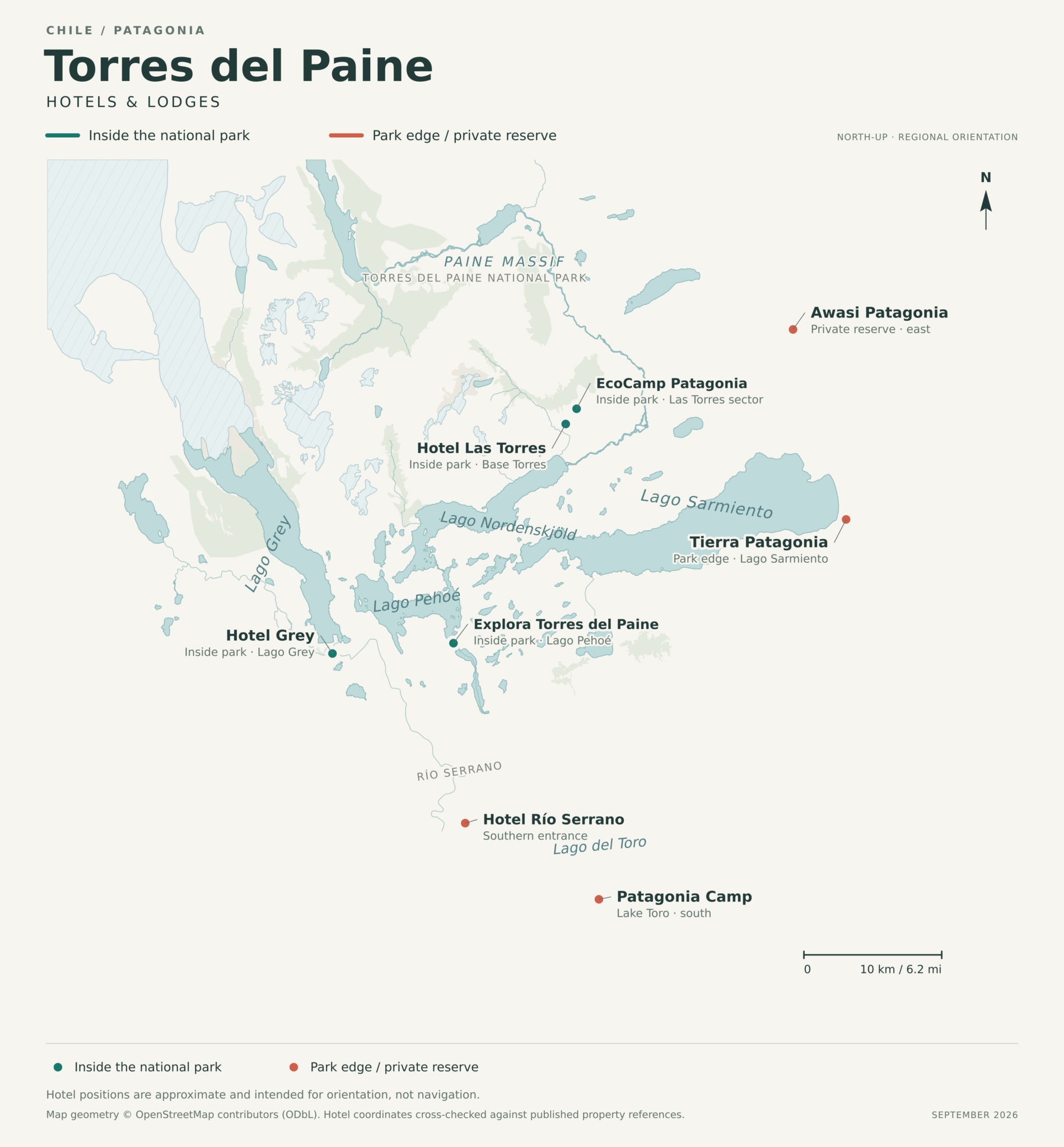
Here are some of our favorite higher-end and luxury places to stay around Torres del Paine.

Awasi Patagonia

For travelers who value privacy above almost everything else, Awasi Patagonia is difficult to match.

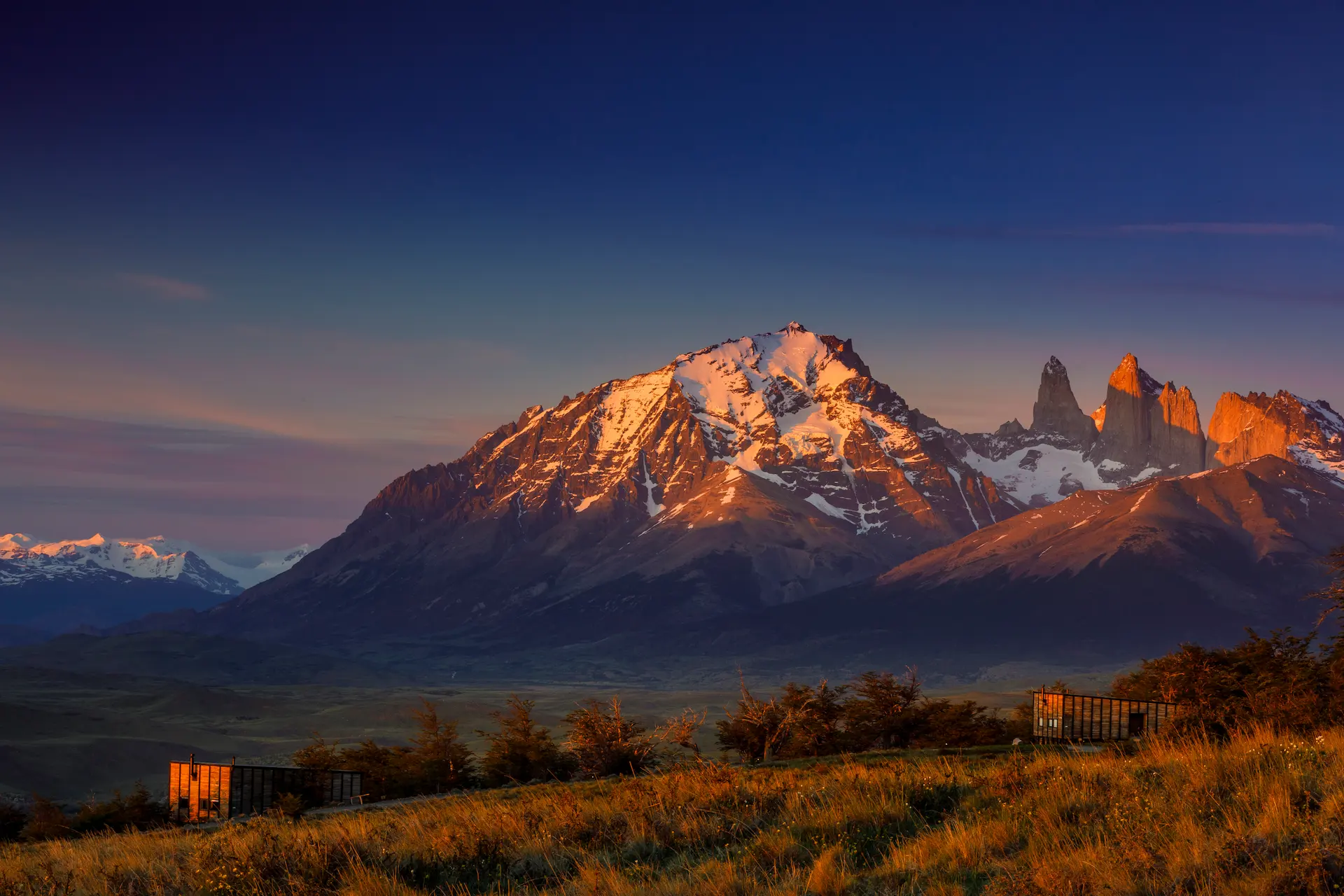
Set within a vast private reserve overlooking the Torres del Paine landscape, Awasi is deliberately small and secluded. Rather than staying in a traditional hotel building, guests stay in individual wooden villas scattered through the landscape, creating a strong feeling of having Patagonia almost to yourself.

Each villa has its own living space, wood-burning stove and outdoor hot tub, with expansive views over the reserve and surrounding mountains.

What really distinguishes Awasi, however, is the way its excursions work. Each villa has a private guide and 4×4 vehicle, allowing each day to be designed around the guests rather than around a fixed group departure.

That flexibility can mean a demanding full-day hike one day, wildlife observation the next, or simply changing plans because the weather suddenly opens up over the mountains.

The reserve is also an important wildlife corridor, making Awasi particularly interesting for travelers hoping to learn more about Patagonia’s pumas and conservation efforts.

Combined with its intimate restaurant, Relais & Châteaux service and exceptionally low number of guests, Awasi is one of the most private luxury experiences in Patagonia.

Best for: Couples, honeymooners and travelers who place a premium on privacy, flexibility and completely personalized exploration.


Tierra Patagonia

Few hotels in Patagonia are as immediately recognizable as Tierra Patagonia.

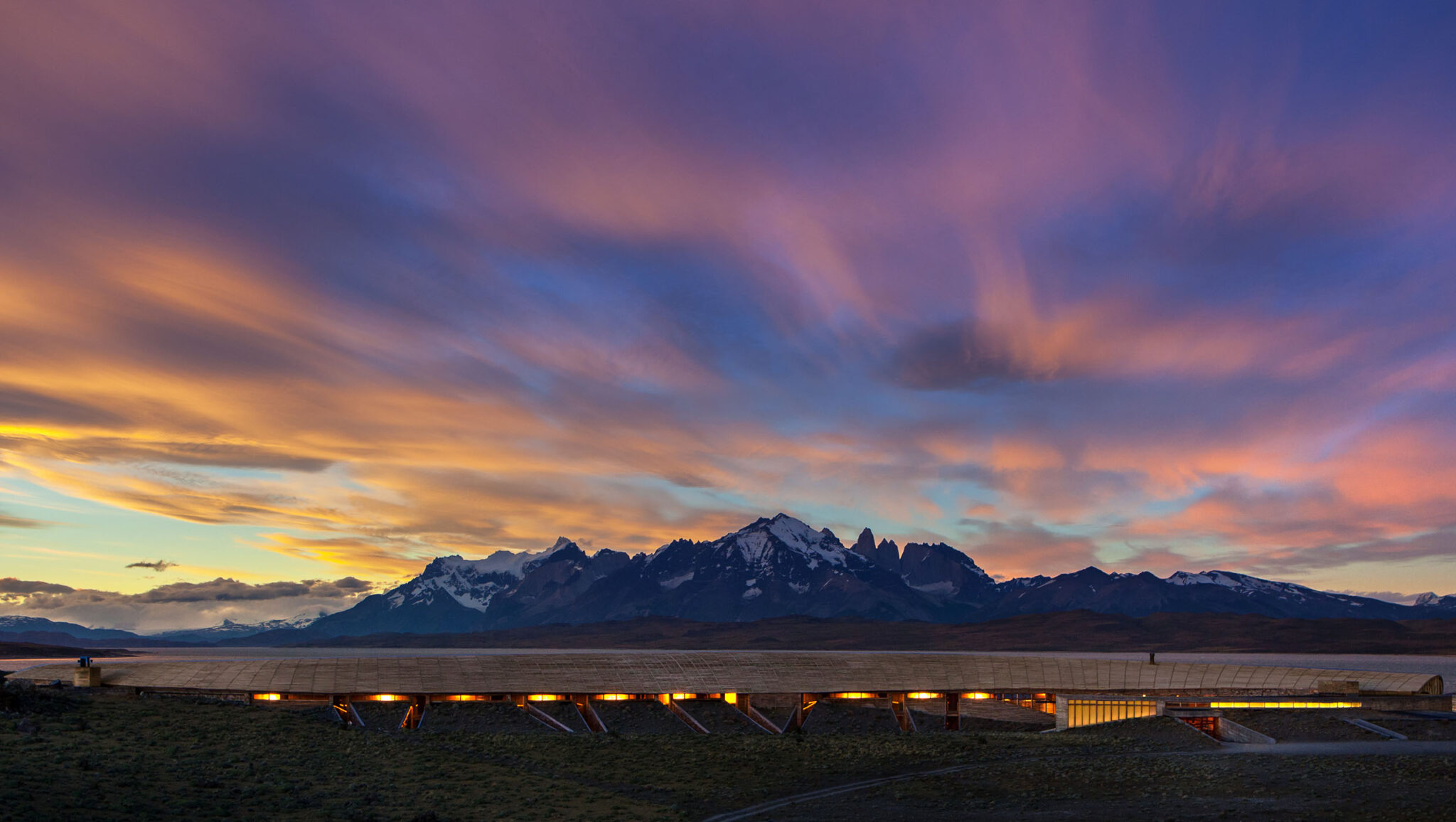
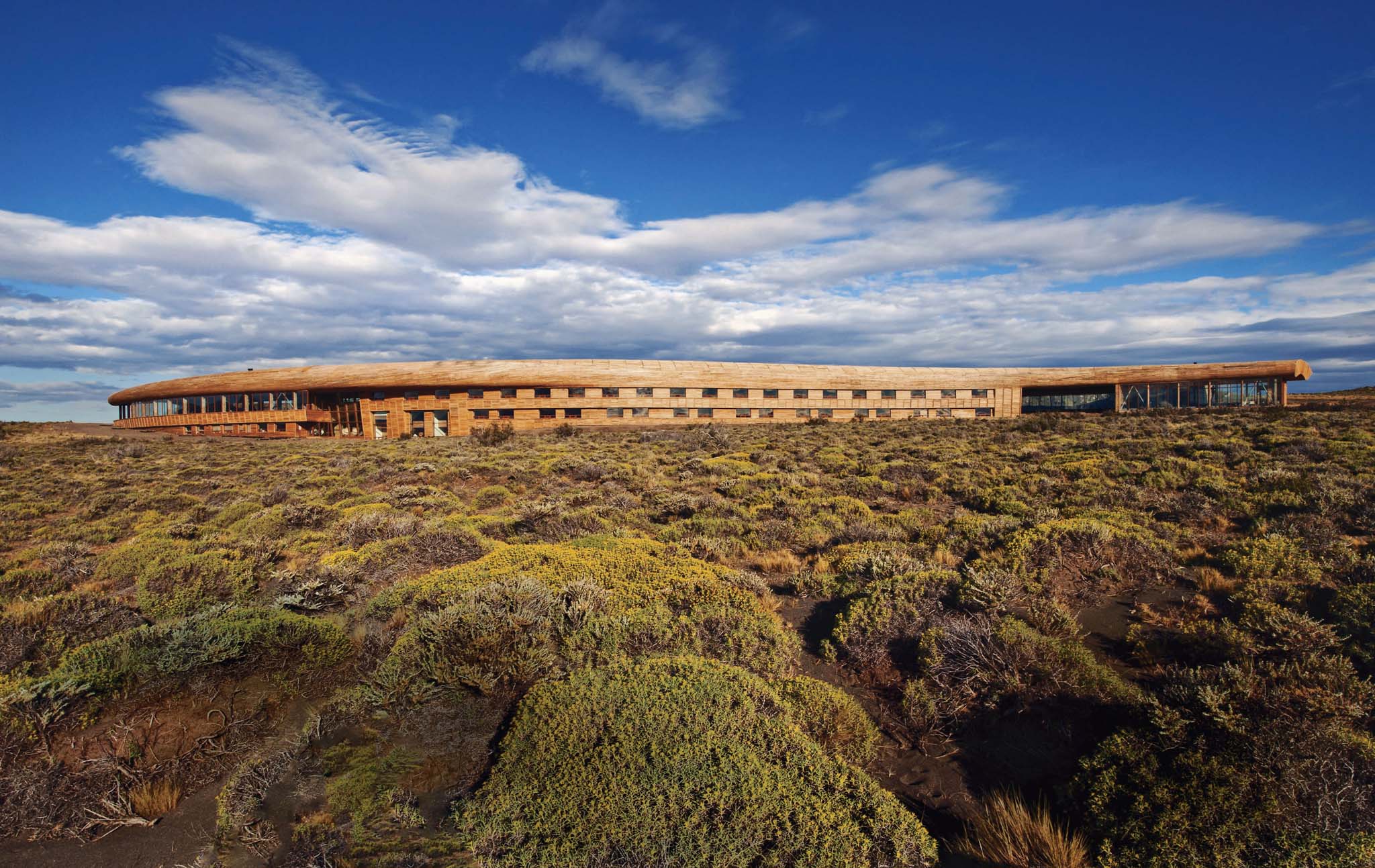
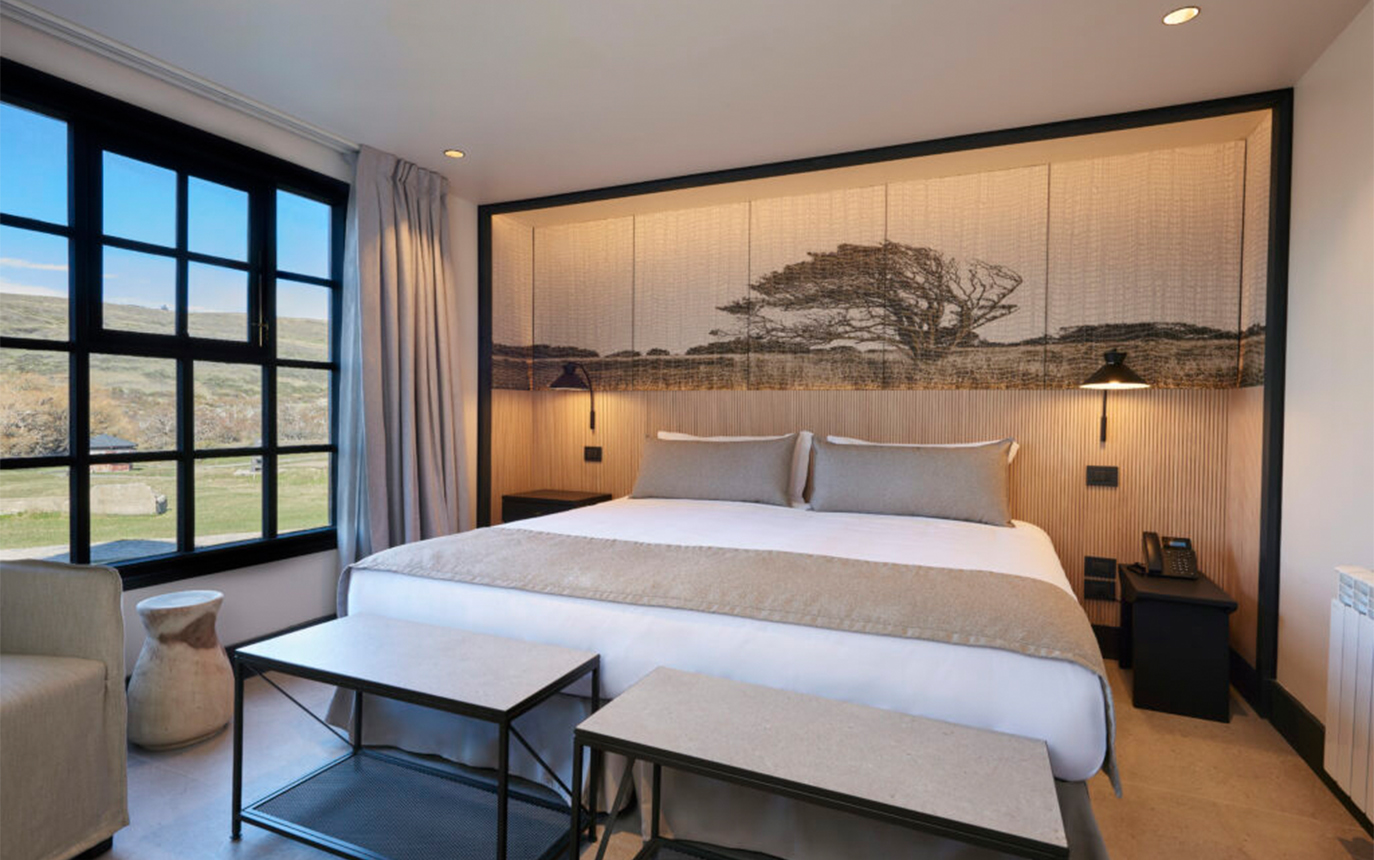
Sitting beside Lake Sarmiento, just outside Torres del Paine National Park, the hotel seems to emerge naturally from the landscape. Its long, low wooden structure follows the contours of the terrain rather than competing with it.

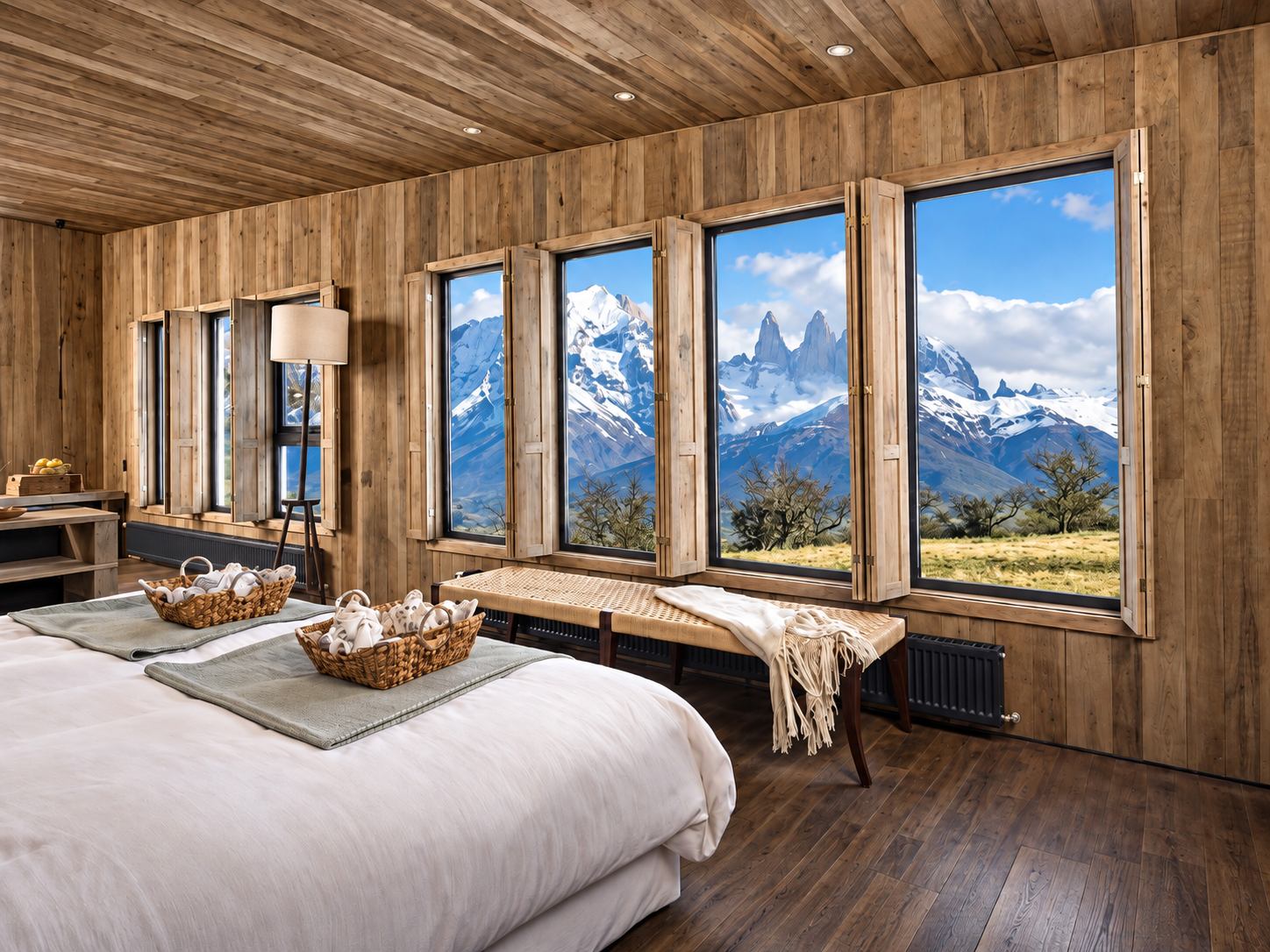
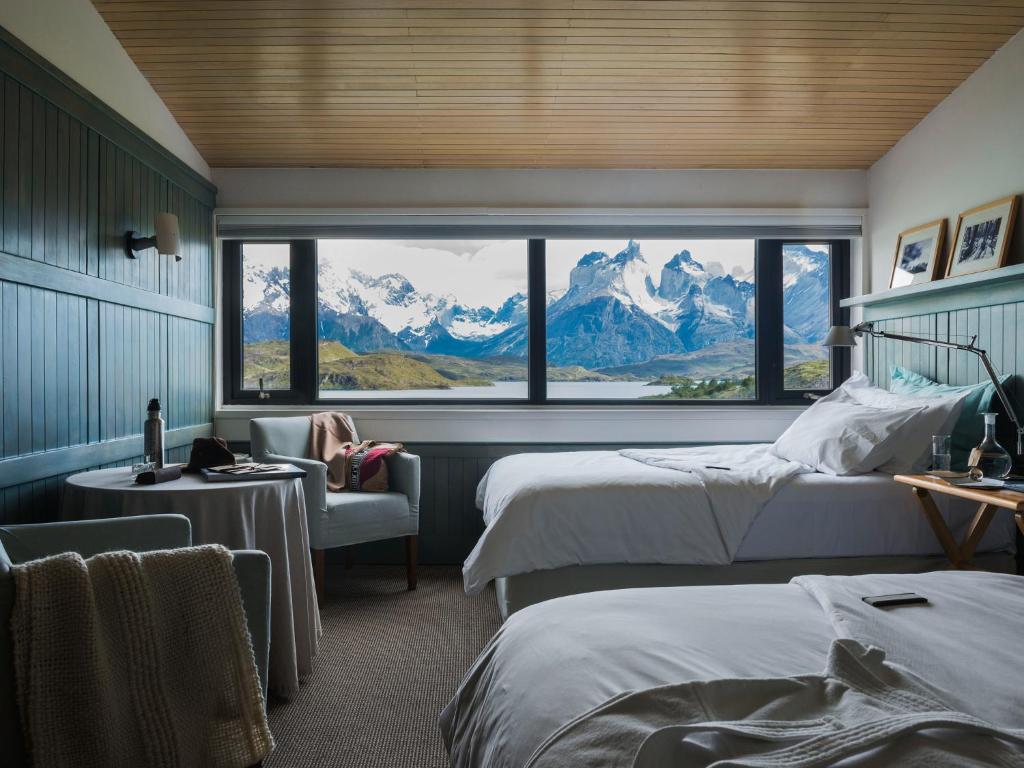
Inside, the same connection to the surroundings continues. The rooms face toward Lake Sarmiento and the Paine massif, with enormous windows making the landscape the dominant feature of the room.

Tierra is particularly appealing to travelers looking for a balance between active exploration and relaxation.

Days can be spent hiking, horseback riding or exploring different sectors of Torres del Paine with the lodge’s guides. Back at the hotel, the Uma Spa includes an indoor pool, sauna, steam room and outdoor hot tub overlooking the surrounding mountains.

There is also something particularly relaxing about Tierra’s atmosphere. Although luxurious, it does not feel overly formal. The architecture, open spaces and panoramic views make it a place where spending an afternoon at the hotel can be as enjoyable as heading out on another excursion.

Best for: Travelers looking for striking architecture, exceptional views, guided exploration and a strong wellness component.


Explora Patagonia

Location is one of Explora Patagonia’s greatest advantages.

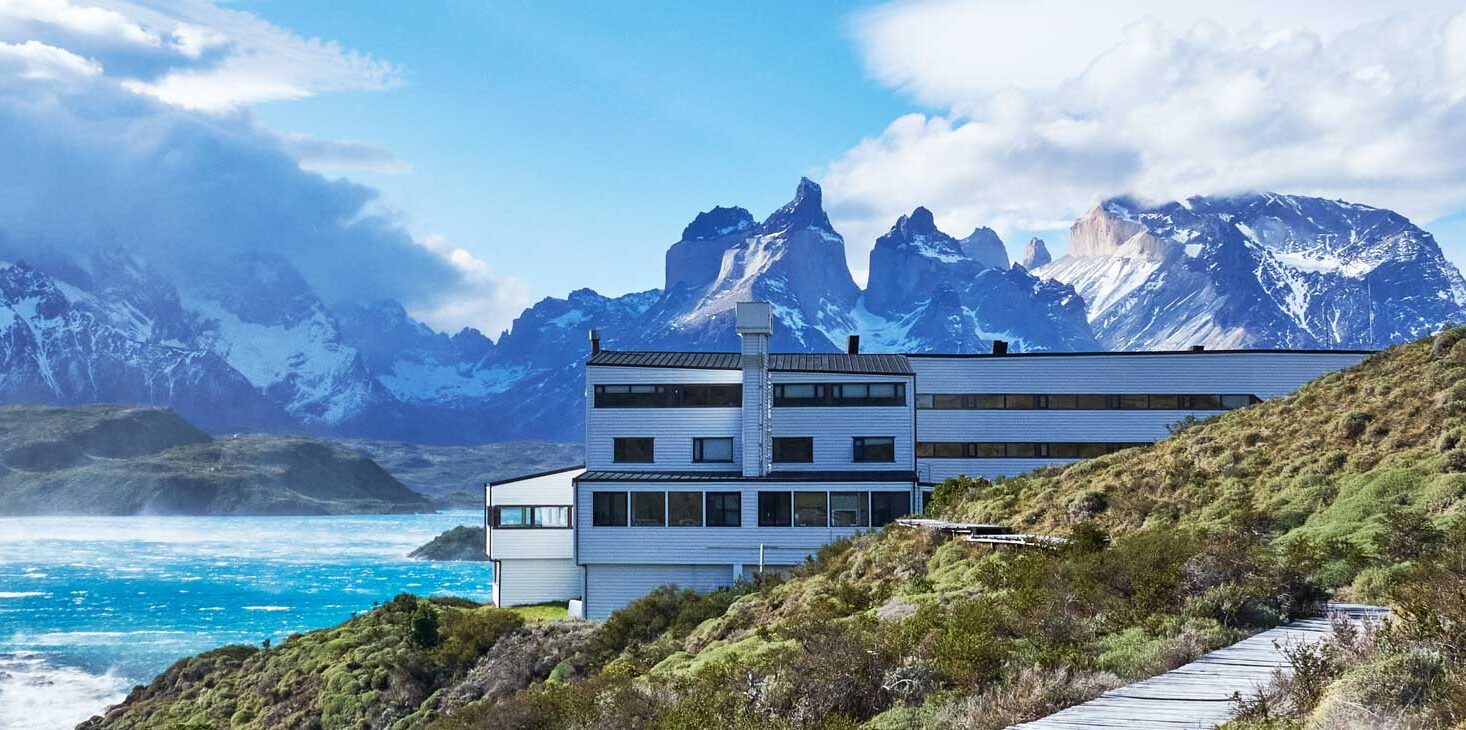
The lodge sits directly inside Torres del Paine National Park on the shores of Lake Pehoé, with extraordinary views toward the Cuernos del Paine. Salto Chico waterfall runs alongside the property.

This puts guests in the middle of one of the park’s most spectacular landscapes from the moment they wake up.

Explora has long approached its lodges as bases for exploration rather than conventional luxury hotels. Its guided program includes hikes, overland journeys and horseback riding, with excursions designed for different levels of difficulty and experience.

Horseback riding is especially important here. Explora maintains its own stables and a long tradition of exploring Patagonia on horseback.

After a day outside, guests can return to the hotel’s bath house, located close to Lake Pehoé, with an indoor heated pool, sauna and outdoor hot tubs overlooking the surrounding landscape.

The hotel itself has a distinctive minimalist style, with warm woods and enormous windows that constantly draw attention back toward Patagonia outside.

Best for: Active travelers who want to stay inside the national park and make exploration the central part of their stay.


Hotel Las Torres Patagonia

Hotel Las Torres offers a very different interpretation of Patagonia.

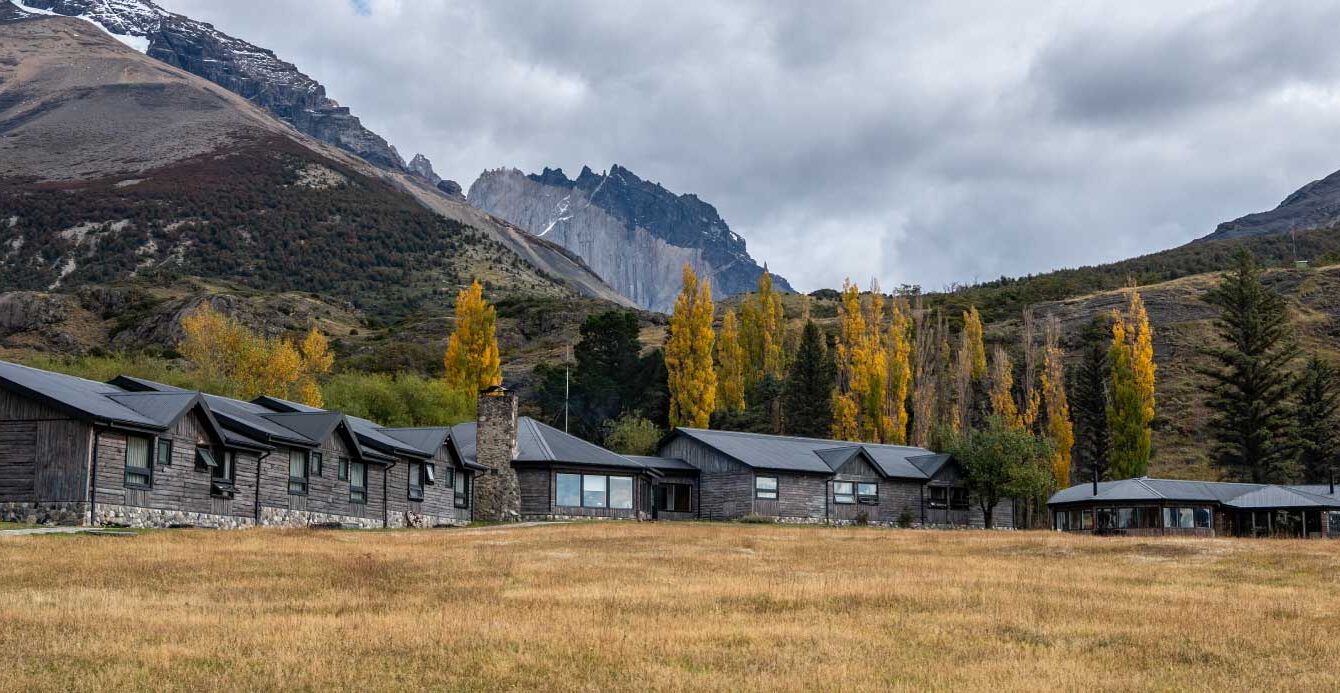
Located inside the park in the Las Torres sector, the property grew out of a traditional Patagonian estancia and retains a strong connection to the region’s ranching culture.

Its greatest practical advantage is immediately obvious to hikers: the hotel is located at the beginning of the famous trail toward Base Torres.

For travelers planning to tackle one of Patagonia’s best-known hikes, waking up at the trailhead is a significant benefit.

But Las Torres is about more than hiking. Horses, baqueanos, gardens and estancia traditions remain an important part of the property’s identity. Guests can explore the surrounding landscapes on horseback and learn more about the culture that developed in this remote part of southern Chile.

The rooms have evolved considerably from the property’s original rustic style and today combine contemporary Patagonian design with natural materials and views of the surrounding mountains.

The property also operates extensive gardens that supply ingredients for its restaurant and supports conservation and restoration initiatives throughout the reserve.

Best for: Hikers, families and travelers interested in combining immediate trail access with traditional Patagonian estancia culture.


EcoCamp Patagonia

EcoCamp proves that staying inside Torres del Paine does not necessarily mean staying in a conventional hotel.

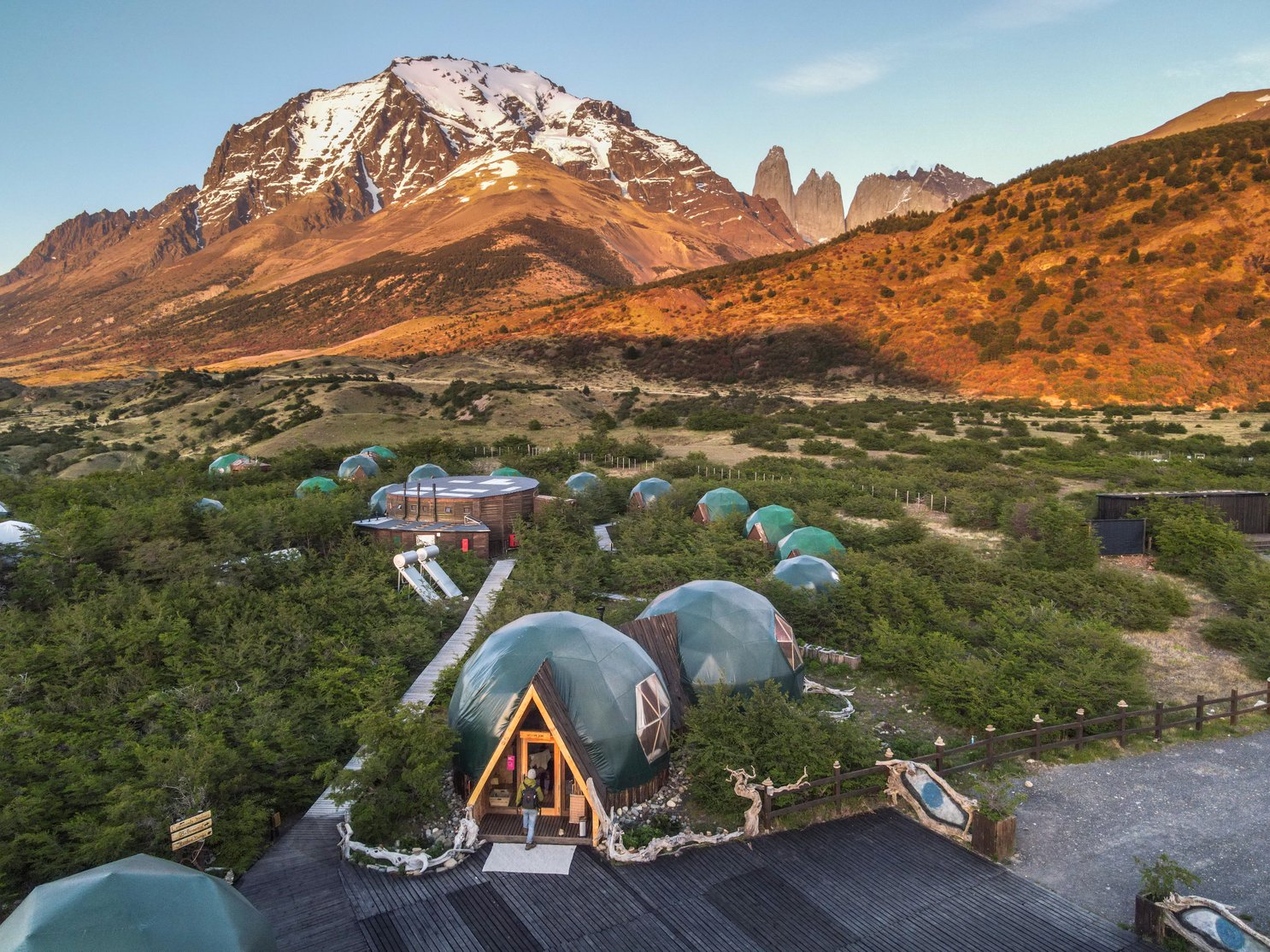
Located in the Las Torres sector of the national park, EcoCamp is built around a collection of geodesic domes designed to minimize their impact on the surrounding landscape.

Accommodation ranges from relatively simple domes to much more comfortable Suite Domes and Suite Dome Lofts with private bathrooms, heating and terraces.

The experience is intentionally closer to nature than at a traditional luxury lodge. You hear the wind, walk between domes beneath the enormous Patagonian sky and spend evenings gathering with other travelers in the communal areas.

Its location is another major advantage. Like Hotel Las Torres, EcoCamp provides excellent access to the Base Torres hiking area.

Despite its remote setting, the property combines this adventurous atmosphere with excellent food, comfortable communal spaces and a sophisticated approach to low-impact tourism.

Best for: Active travelers who want to stay inside the park and prefer an adventurous, social and sustainability-focused experience over conventional hotel luxury.


Hotel Lago Grey

Hotel Lago Grey occupies one of the most distinctive locations inside Torres del Paine National Park.

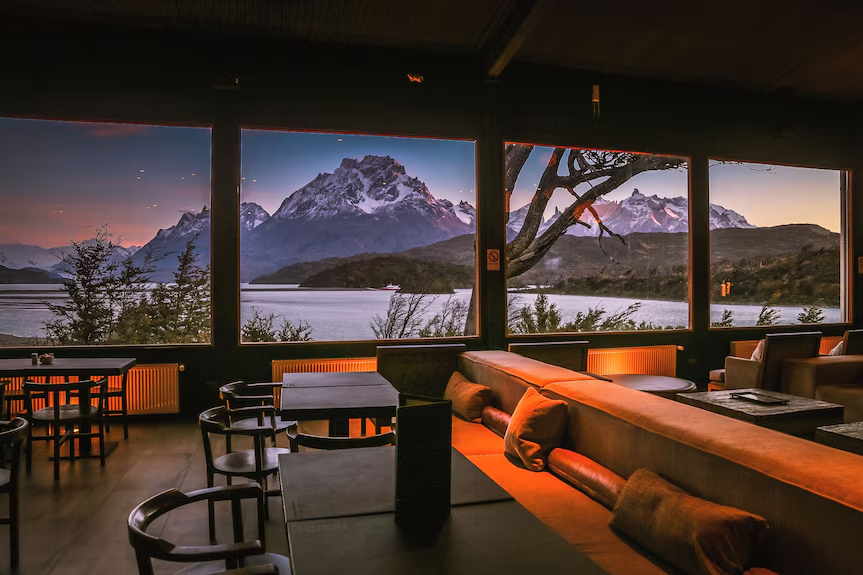
Set among native forest on the shores of Lake Grey, in the western sector of the park, the hotel feels noticeably different from properties facing the Paine massif. Here, the landscape is dominated by water, forest, icebergs and the immense Southern Patagonian Ice Field beyond.

One of the hotel’s greatest attractions is simply looking outside. From its restaurant and common areas, guests can watch blue icebergs drifting across Lake Grey after breaking away from the glacier in the distance.

The property is also particularly convenient for travelers wanting to experience Grey Glacier. The navigation across the lake departs from this sector, bringing passengers close to the glacier’s immense walls of blue ice.

Rooms are comfortable rather than overtly luxurious, with the most desirable categories facing toward the lake and surrounding mountains. The location also provides access to walks around Grey Beach and other trails in the western part of Torres del Paine.

Hotel Lago Grey therefore makes particular sense for travelers who care more about being immersed in this extraordinary part of the park than about having an elaborate luxury-hotel experience.

Best for: Travelers interested in Grey Glacier, dramatic scenery and staying inside the national park without moving into the highest luxury price category.


Estancia Cerro Guido

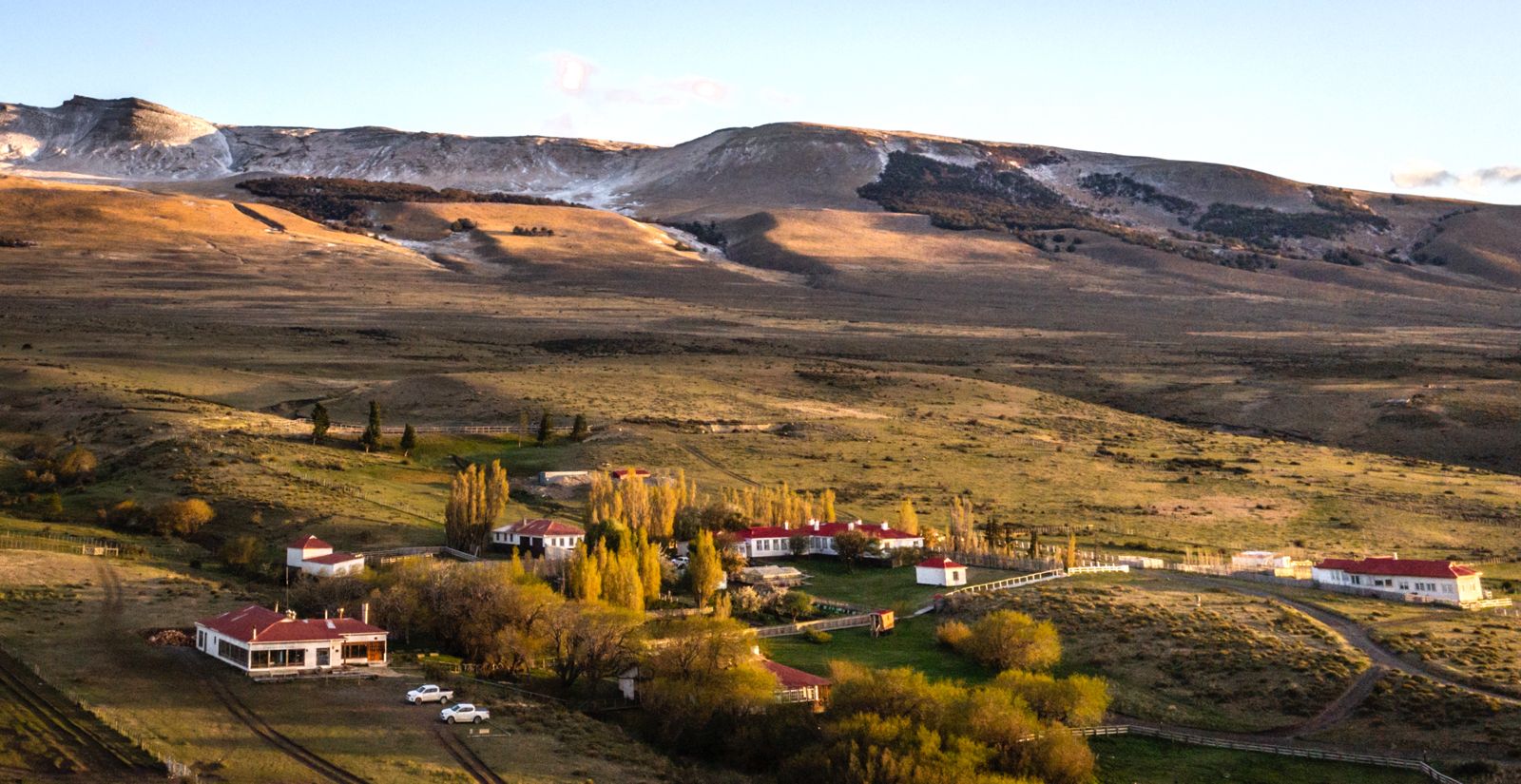
Cerro Guido offers something that most hotels around Torres del Paine cannot: the experience of staying on an enormous working Patagonian estancia.

Located just beyond the park’s eastern boundary, the property extends across an extraordinary expanse of steppe, mountains and valleys.

Its historic buildings preserve the atmosphere of the ranching era that shaped this region, while the experience today combines hospitality, conservation and life on a functioning estancia.

Guests may see baqueanos working with horses, sheep and livestock, while excursions venture deep into areas rarely visited by conventional Torres del Paine travelers.

Cerro Guido has also become particularly well known for its approach to puma conservation. Rather than viewing predators only as a threat to livestock, its conservation initiatives have explored ways for ranching and wildlife to coexist.

For guests, this creates opportunities to explore the reserve with guides and trackers while learning about one of Patagonia’s most fascinating conservation challenges.

The enormous scale of the property also allows for horseback riding, overland exploration and hiking far from the busiest sectors of the national park.

Best for: Wildlife enthusiasts and travelers interested in authentic estancia life, conservation and exploring well beyond the traditional Torres del Paine circuit.


Patagonia Camp

Patagonia Camp offers another interpretation of luxury glamping.

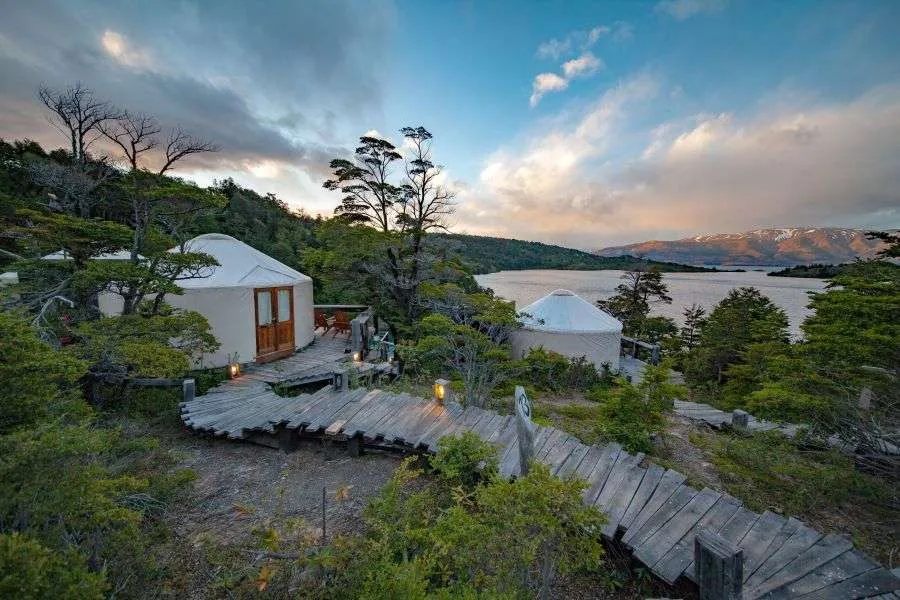
Located in a private reserve beside Lake Toro, south of Torres del Paine National Park, the property consists of individual yurts connected through the native forest by raised wooden walkways.

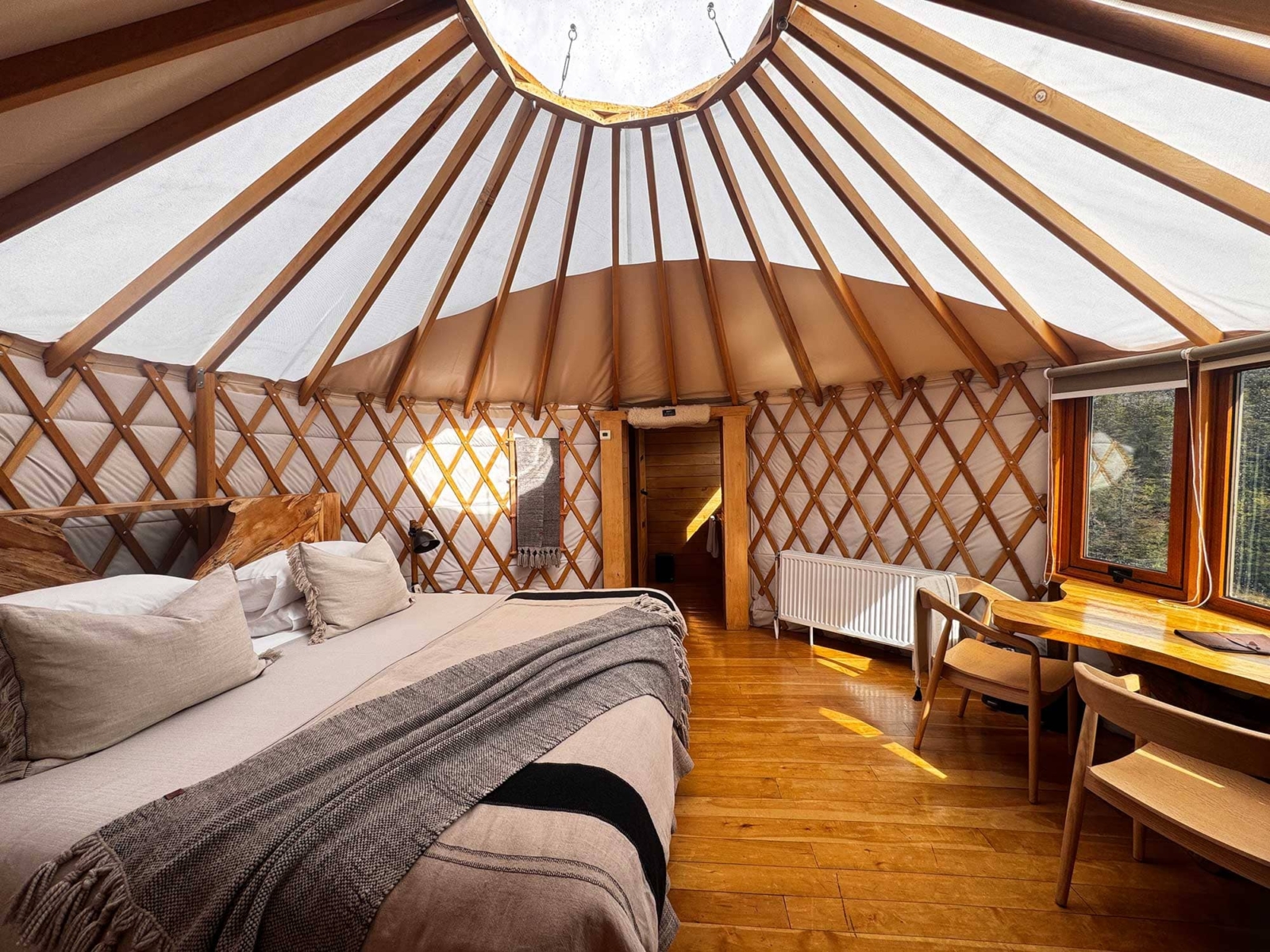
The yurts are considerably more sophisticated than the word “camp” might suggest. They include heating, private bathrooms and terraces overlooking the lake and surrounding mountains.

One of their most distinctive features is the circular opening in the roof above the bed, allowing guests to look upward toward Patagonia’s night sky.

Higher-category yurts add private outdoor hot tubs, creating one of the most romantic accommodation experiences in the region.

Because Patagonia Camp sits within its own reserve, guests can also hike, kayak and explore directly from the property in addition to taking excursions into Torres del Paine National Park.

The result is a quieter alternative to staying inside the park itself, with a strong sense of immersion in the landscape.

Best for: Couples and travelers looking for a romantic glamping experience combining nature, comfort and a quieter location.


Río Serrano Hotel + Spa

Río Serrano Hotel + Spa offers one of the best combinations of comfort, flexibility and scenery around Torres del Paine.

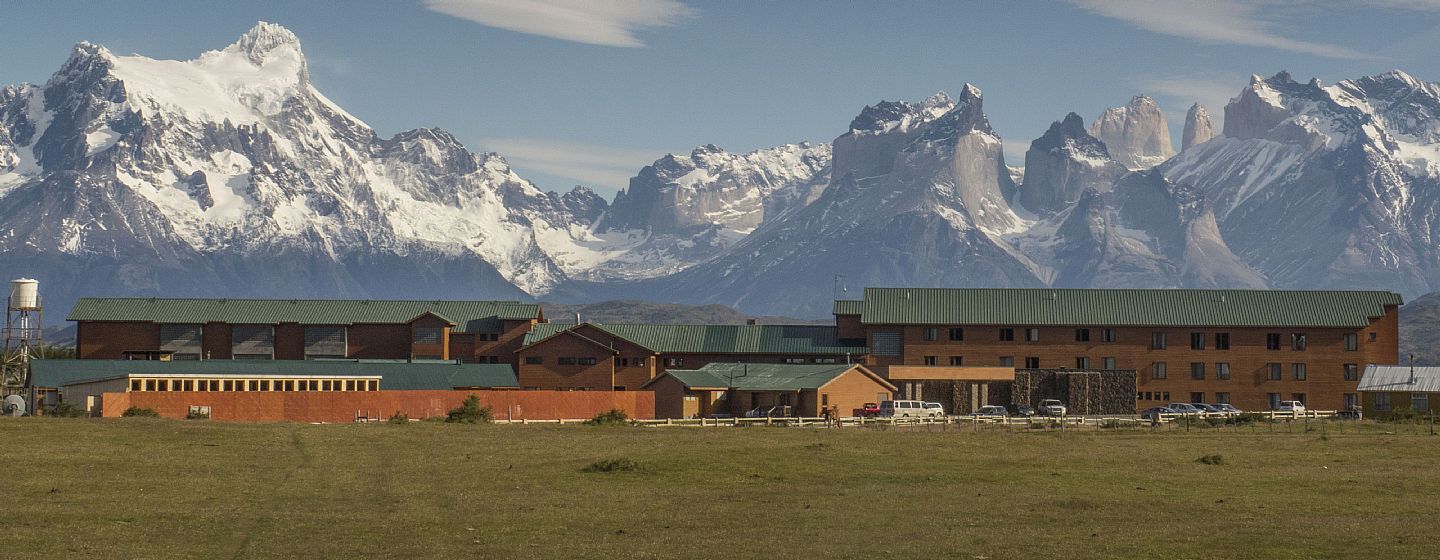
Located in Villa Río Serrano, just outside the park’s southern entrance, the hotel looks across the open valley toward an enormous panorama of the Paine massif. The best rooms make full use of that position with large windows facing directly toward the mountains.

Compared with many of the destination’s smaller lodges, Río Serrano feels more like a full-service resort. Its extensive spa is a major part of the experience, with an indoor heated pool positioned in front of floor-to-ceiling mountain views, along with saunas, treatment rooms and wellness facilities.

Another advantage is flexibility.

While many premium Patagonia lodges are built around fixed multi-night, all-inclusive programs, Río Serrano offers different ways to stay, from accommodation with breakfast to more comprehensive packages incorporating meals and excursions.

Its location close to the Serrano entrance also provides convenient access to the western and central sectors of Torres del Paine, including excursions toward Lake Grey and the park’s major viewpoints.

With more rooms and infrastructure than most of the area’s boutique lodges, Río Serrano has a different atmosphere from Awasi, Tierra or Explora. What it offers instead is space, excellent facilities, impressive views and considerably more flexibility in how a Torres del Paine stay is structured.

Best for: Couples, families and travelers who want excellent views, a serious spa and greater flexibility than the traditional all-inclusive lodge model.